· The Rapid Architect Team · AI · 10 min read
Agentic AI: How Autonomous Agents Are Revolutionizing SMB Operations in 2026
Discover how agentic AI and autonomous agents are transforming SMB operations in 2026, shifting from simple chatbots to intelligent systems that execute multi-step tasks, automate workflows, and handle customer service, scheduling, and invoicing with minimal human input.

Podcast Discussion
Introduction
Imagine walking into your office on Monday morning to find that your AI assistant has already resolved 47 customer inquiries, scheduled 12 client meetings based on your actual availability, sent out 8 invoices with personalized follow-ups, and flagged two potential issues that genuinely need your attention. This isn’t science fiction—it’s the reality of agentic AI, and it’s transforming how small and medium businesses operate in 2026.
For years, SMB owners have heard promises about artificial intelligence revolutionizing their businesses. Yet many found themselves disappointed by chatbots that could barely handle simple FAQs, let alone manage complex business operations. The gap between AI hype and AI reality left many entrepreneurs skeptical. But something fundamental has changed. We’ve crossed a threshold from AI that merely responds to AI that actually does—and the implications for SMB productivity are profound .
Understanding the Shift: From Chatbots to Autonomous Agents
To appreciate why agentic AI represents such a significant leap forward, it helps to understand what came before. Traditional chatbots operate on a simple stimulus-response model. A customer asks a question, the bot searches its knowledge base, and it returns an answer. If the question falls outside its programmed parameters, the conversation stalls or gets escalated to a human.
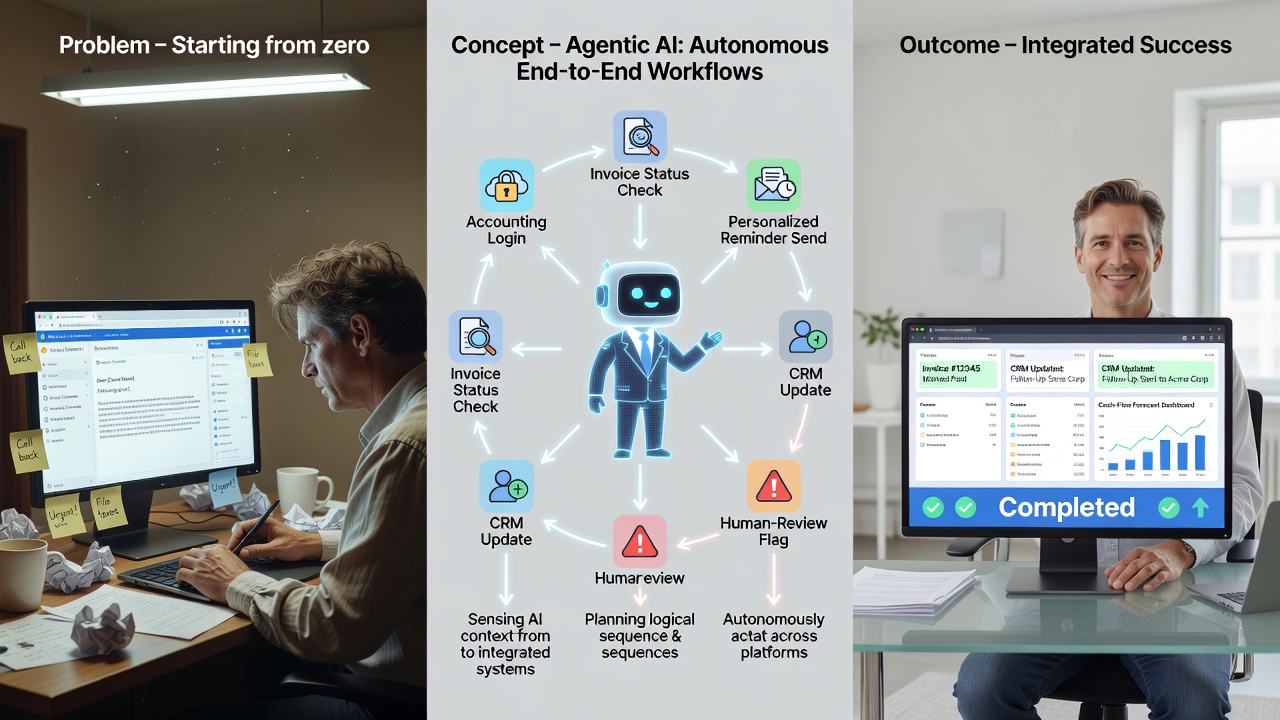
Agentic AI operates on an entirely different paradigm. These systems don’t just respond—they reason, plan, and execute. When an autonomous agent encounters a customer complaint about a delayed shipment, it doesn’t simply apologize and provide a tracking number. Instead, it investigates the shipping status, identifies the cause of the delay, calculates a new delivery estimate, determines appropriate compensation based on the customer’s history and your company policies, applies that compensation, sends a personalized communication, and updates your internal systems—all without human intervention .
The key distinction lies in what researchers call “goal-directed behavior.” Traditional AI tools are task-specific: they do one thing when prompted. Agentic AI systems are goal-oriented: you give them an objective, and they figure out the steps needed to achieve it. This shift from task execution to goal achievement is what makes autonomous agents so powerful for resource-constrained SMBs .
The Technology Behind the Transformation
Several technological advances have converged to make agentic AI practical for businesses of all sizes in 2026. Large language models have evolved beyond text generation to develop genuine reasoning capabilities. These systems can now break down complex problems, consider multiple approaches, and select optimal solutions based on context .
Equally important is the development of robust tool integration frameworks. Modern autonomous agents don’t exist in isolation—they connect seamlessly with your existing business software. Your AI agent can access your CRM, accounting software, scheduling tools, email platforms, and inventory systems simultaneously, pulling information and taking actions across all of them .
The third crucial element is what developers call “memory architecture.” Unlike earlier AI systems that treated each interaction as isolated, agentic AI maintains persistent memory of past interactions, learned preferences, and accumulated knowledge about your business. Your autonomous agent remembers that Client A prefers morning meetings, that Vendor B typically needs a reminder before payment, and that your busy season requires adjusted inventory thresholds .
Real-World Applications Transforming SMB Operations
Customer Service That Never Sleeps
Customer service represents perhaps the most immediately impactful application of agentic AI for SMBs. Consider how a traditional support setup works: customers submit tickets, staff members review and respond during business hours, and complex issues bounce between departments. Response times stretch into hours or days, and consistency varies with whoever handles each case.
With autonomous agents, customer inquiries receive immediate, intelligent responses regardless of when they arrive. But more importantly, these agents don’t just answer questions—they solve problems. A customer reporting a defective product might have their case resolved in minutes: the agent verifies the purchase, checks warranty status, initiates a replacement shipment, generates a return label, and sends confirmation—all while maintaining a natural, empathetic conversation .
One mid-sized e-commerce company reported that implementing agentic AI for customer service reduced their average resolution time from 18 hours to 23 minutes while simultaneously improving customer satisfaction scores by 34 percent . For SMBs competing against larger rivals with bigger support teams, this capability represents a genuine competitive advantage.
Intelligent Scheduling That Understands Context
Scheduling might seem mundane, but it consumes enormous amounts of time and mental energy for SMB owners and their teams. The back-and-forth of finding mutually available times, accounting for travel, preparing for meetings, and managing cancellations adds up to hours of lost productivity each week.
Autonomous scheduling agents transform this process entirely. These systems don’t just find open calendar slots—they understand the context of each meeting. They know that client pitches need preparation time blocked beforehand, that certain team members should attend specific types of meetings, and that you prefer not to schedule demanding conversations on Friday afternoons .
When a prospect requests a meeting, your scheduling agent evaluates their potential value based on your CRM data, selects an appropriate meeting length, finds optimal times that align with your energy patterns and existing commitments, sends the invitation, and automatically adds relevant preparation tasks to your to-do list. If the prospect needs to reschedule, the agent handles it seamlessly, even suggesting alternative times proactively if it detects calendar conflicts developing .
Automated Invoicing and Financial Operations
Cash flow management remains one of the most critical challenges for SMBs, and late payments can threaten business survival. Traditional invoicing processes involve manual creation, sending, tracking, and follow-up—each step introducing delays and opportunities for error.
Agentic AI systems approach invoicing as an end-to-end process rather than discrete tasks. Upon project completion or product delivery, the agent automatically generates accurate invoices based on contracts and actual work performed. It sends these invoices through the customer’s preferred channel, tracks payment status, and initiates follow-up communications when payments become overdue .
But the intelligence goes deeper. These systems learn which customers typically pay promptly and which need reminders. They can adjust communication tone based on customer relationship value, offer early payment discounts when cash flow projections suggest benefit, and escalate to human attention only when situations require judgment calls about customer relationships or potential write-offs .
Decision Support That Actually Supports Decisions
Perhaps the most sophisticated application of agentic AI involves supporting complex business decisions. Rather than simply presenting data dashboards that require human interpretation, autonomous agents actively analyze situations and recommend actions.
Consider inventory management. An agentic system doesn’t just alert you when stock runs low—it analyzes sales velocity, seasonal patterns, supplier lead times, cash flow projections, and storage costs to recommend optimal reorder quantities and timing. It can even negotiate with suppliers, comparing quotes and terms to secure the best deals .
For SMBs without dedicated analysts or operations specialists, this capability democratizes sophisticated decision-making. The corner bakery can access the same quality of demand forecasting that major chains use, while the local accounting firm can offer clients insights previously available only from big consulting firms .
Implementation Strategies for SMBs
Adopting agentic AI successfully requires thoughtful implementation. The most effective approach involves starting with high-volume, well-defined processes where the cost of errors is manageable. Customer service inquiries, appointment scheduling, and routine invoicing make excellent starting points .
Begin by documenting your current processes thoroughly. Autonomous agents need to understand not just what tasks to perform, but the reasoning behind your business rules. Why do certain customers receive different treatment? What exceptions exist to standard policies? This documentation serves as the foundation for agent training .
Integration planning deserves serious attention. Audit your existing software ecosystem and verify that your chosen agentic AI platform offers robust connections to your critical tools. Gaps in integration create gaps in agent capability—an agent that can’t access your inventory system can’t make informed decisions about order fulfillment .
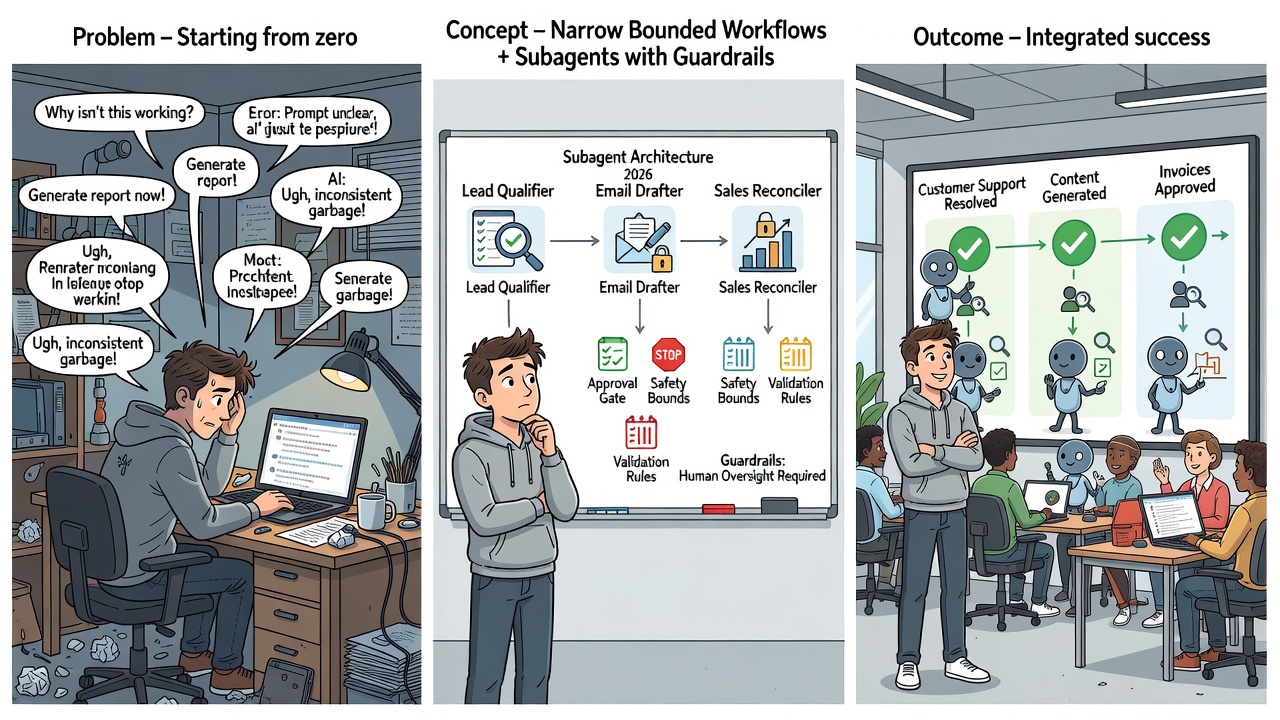
Establish clear escalation protocols before deployment. Define specifically which situations require human judgment and ensure your agents can seamlessly hand off to appropriate team members. The goal isn’t to eliminate human involvement but to focus human attention where it adds the most value .
Addressing Legitimate Concerns
SMB owners rightfully raise concerns about autonomous systems making decisions on their behalf. The most successful implementations address these concerns through thoughtful governance structures.
Transparency mechanisms allow you to understand why agents made specific decisions. Modern agentic AI systems can explain their reasoning, showing the factors they considered and the logic they applied. This audit capability proves essential for maintaining accountability and improving agent performance over time .
Gradual autonomy expansion represents another best practice. Start with agents that recommend actions for human approval, then progressively grant autonomous authority as confidence builds. A customer service agent might initially draft responses for review before gaining permission to send routine communications independently .
Data security requires careful attention. Autonomous agents with access to customer information, financial data, and business systems present attractive targets for malicious actors. Verify that your chosen platform employs enterprise-grade security measures, and implement appropriate access controls limiting agent permissions to necessary functions .
The Competitive Imperative
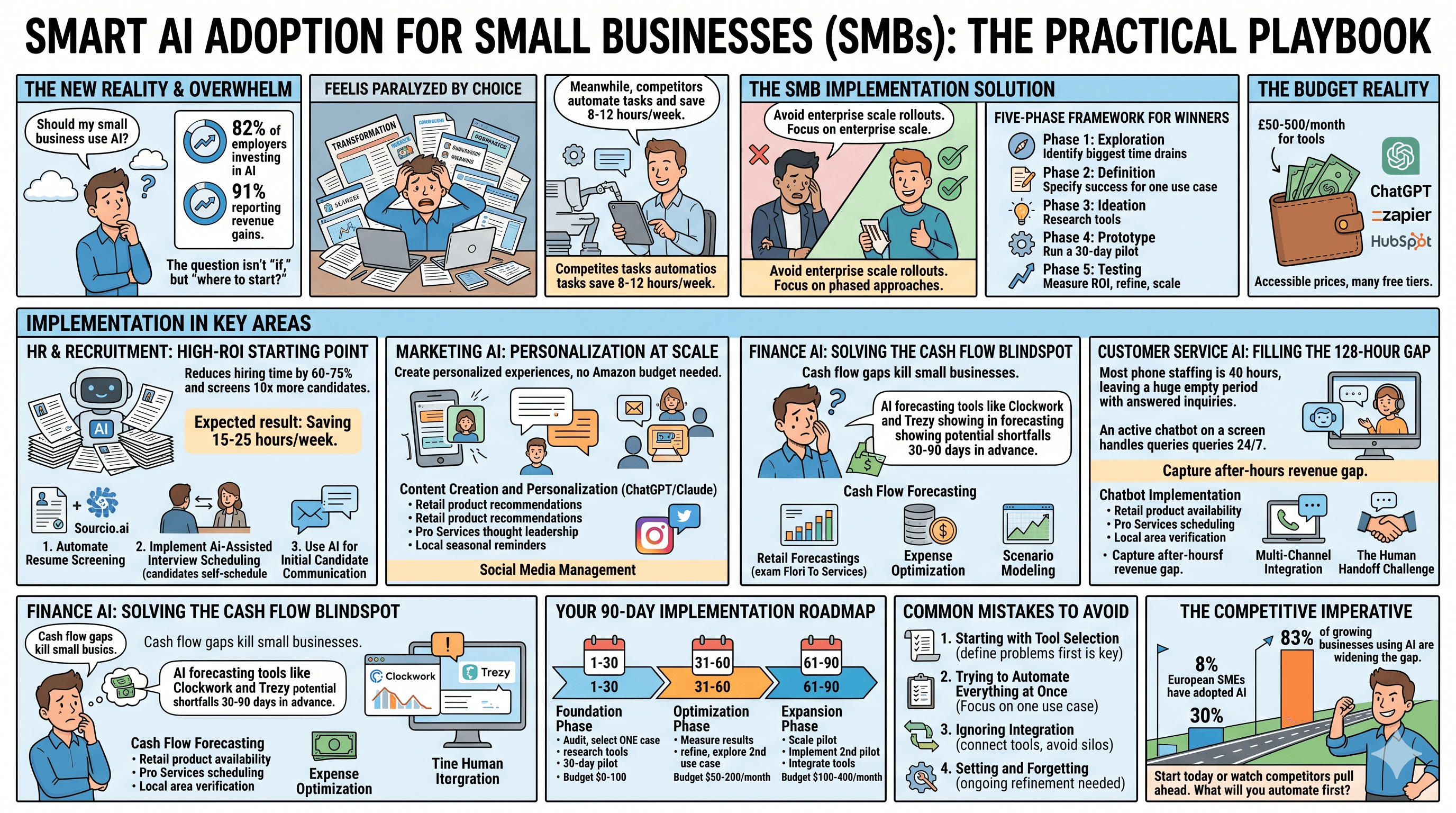
As agentic AI adoption accelerates, SMBs face a strategic choice. Early adopters gain significant advantages: lower operational costs, faster customer response, more consistent service delivery, and freedom to focus human talent on high-value activities. Those who delay risk finding themselves outcompeted by rivals who can do more with less .
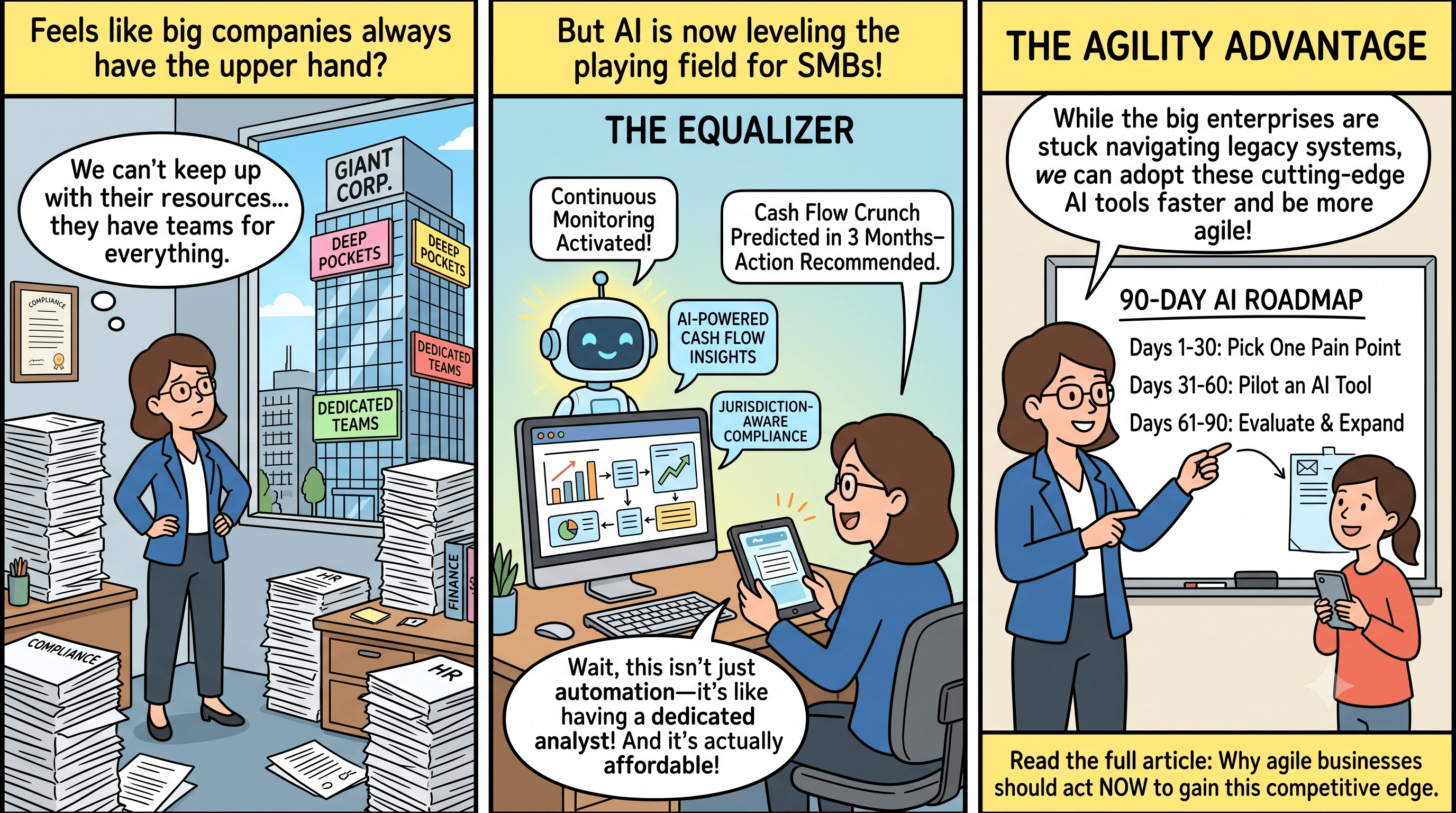
The democratization of sophisticated AI capabilities levels the playing field in important ways. SMBs can now access operational efficiency previously available only to enterprises with substantial technology budgets. A five-person consulting firm can deliver client service rivaling firms ten times their size when autonomous agents handle routine operations .
However, the window for competitive advantage through early adoption will eventually close as these tools become ubiquitous. The SMBs that invest now in understanding and implementing agentic AI position themselves not just for immediate productivity gains but for long-term competitive strength .
Looking Ahead: The Evolution Continues
The agentic AI capabilities available today represent just the beginning. Development trajectories suggest increasingly sophisticated reasoning, broader integration capabilities, and more nuanced understanding of business context. Agents that currently handle operational tasks will progressively take on strategic functions .
Multi-agent systems represent an emerging frontier, where specialized agents collaborate to tackle complex challenges. Your customer service agent might consult with your inventory agent and your scheduling agent to resolve a customer issue that spans multiple operational domains—all coordinated automatically .
For SMB owners, the key insight is that agentic AI isn’t a future consideration—it’s a present reality with immediate practical applications. The businesses thriving in 2026 and beyond will be those that embrace these tools thoughtfully, maintaining human judgment where it matters while leveraging autonomous agents for operational excellence.
Conclusion: Your Next Steps
The shift from basic chatbots to autonomous agents represents a genuine inflection point for SMB productivity. These systems don’t just save time—they fundamentally expand what small teams can accomplish. Customer service that rivals major enterprises, financial operations that run themselves, scheduling that respects your priorities, and decision support that enhances your judgment are all within reach.
Start your agentic AI journey by identifying one high-volume process that consumes disproportionate time relative to its strategic importance. Research platforms specifically designed for SMB implementation, prioritizing those with strong integration capabilities and transparent pricing. Engage your team in the transition, positioning autonomous agents as tools that free them for more meaningful work rather than threats to their roles.
The question for SMB owners is no longer whether to adopt agentic AI, but how quickly and thoughtfully they can integrate these capabilities into their operations. Those who act decisively will find themselves with a powerful ally in building more efficient, responsive, and competitive businesses .