· The Rapid Architect Team · AI · 9 min read
Simple AI Governance and Policies for Small Teams: Lightweight Templates SMB Owners Can Use Today
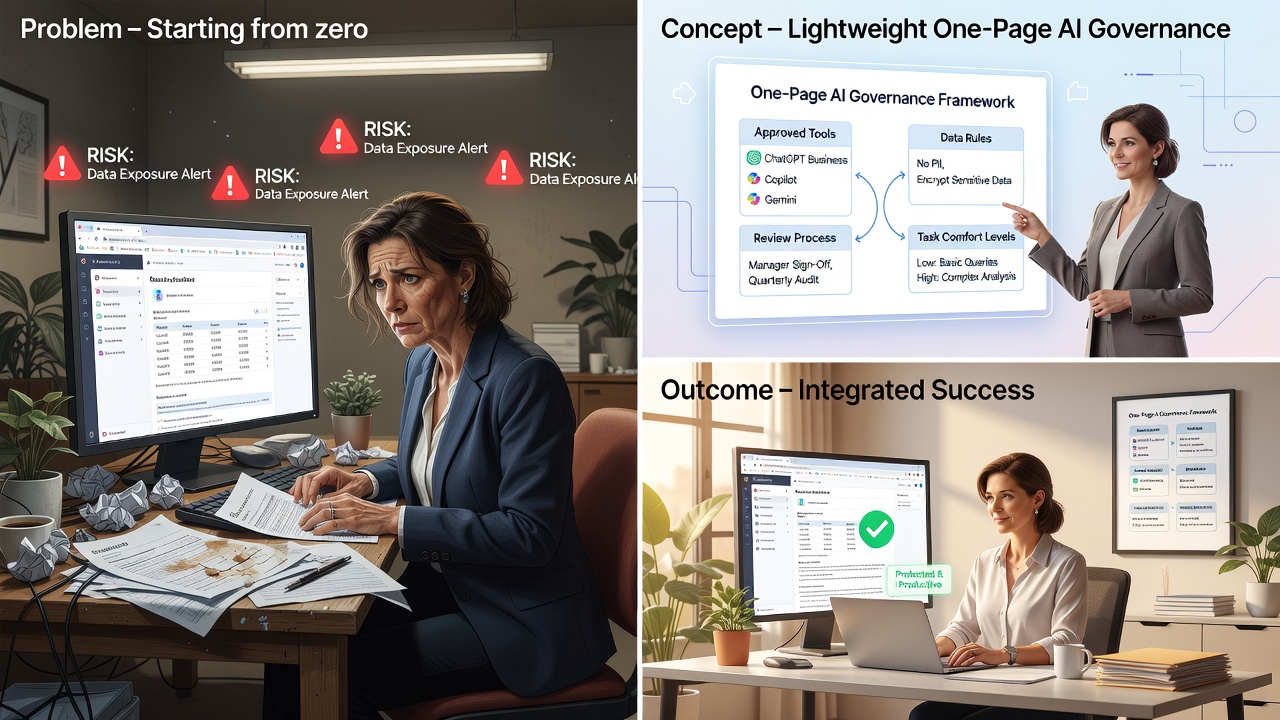
Small businesses, especially accounting firms, are racing ahead with AI tools but lagging on policies. This post delivers practical, one-page governance templates covering approved tools, data rules, review processes, and task-specific comfort levels so owners can protect clients and capture efficiency gains without enterprise complexity.
Podcast Discussion
Introduction
Simple artificial intelligence Governance and Policies for Small Teams: Lightweight Templates SMB Owners Can Use Today
Small and medium businesses are embracing artificial intelligence at breakneck speed, yet formal policies remain scarce. Nearly all accounting professionals now use tools like ChatGPT daily, but only about 21 percent have documented guidelines in place. This mismatch creates real risks around client data, accuracy, and liability. Two-thirds of U.S. small businesses leverage artificial intelligence in some form, yet most operate without rules, leaving sensitive information exposed in public models.
Owners of 10- to 30-person teams do not need heavy enterprise binders. They need lightweight, one-page templates that can be customized in under an hour. These documents focus on approved tools, clear data limits, human review steps, and task-by-task comfort levels. Sources such as the AICPA small-firm template and practical guides from accounting media show that simple frameworks close the gap without slowing operations.
The Growing Gap Between artificial intelligence Adoption and Oversight in Small Teams
The rapid integration of generative artificial intelligence into everyday workflows has outpaced governance in SMBs across industries. Accounting firms in particular face heightened exposure because client data includes tax returns, financial statements, and personally identifiable information. Without policies, employees may inadvertently feed sensitive details into public models, violating confidentiality agreements and regulatory standards like IRS Circular 230. A recent survey highlighted that while adoption rates exceed 65 percent among small professional services firms, documented artificial intelligence rules exist in fewer than one-quarter of those organizations. This creates liability gaps that can result in client disputes or professional sanctions.
Lightweight policies address this by providing clear boundaries without bureaucratic overhead. For example, a 12-person bookkeeping firm in Texas implemented a one-page guide after a junior staff member accidentally included a client’s Social Security number in a prompt. The resulting policy prohibited such inputs and required anonymized data only, reducing risk immediately. SMB owners benefit from this approach because it aligns with existing professional standards while allowing quick adoption of efficiency tools. Implementation typically involves a single team meeting and email distribution, ensuring compliance without dedicated compliance officers.
Why Lightweight One-Page Policies Win for SMBs
Enterprise governance often runs dozens of pages and requires dedicated compliance staff. Small teams succeed instead with founder-led or operations-led processes that take 15 minutes to introduce and one hour to tailor. A typical seven-section model covers purpose, approved tools, prohibited inputs, output review, liability notes, training commitments, and version control.
Practical example: An eight-person accounting firm in Ohio used a one-page template to list ChatGPT, Gemini, and Microsoft Copilot as approved tools. They added a single sentence banning client tax IDs in any prompt. Staff completed the document during a lunch-and-learn session and immediately reduced informal tool use outside the approved list. This approach delivers quick wins while meeting professional standards such as IRS Circular 230 and client confidentiality expectations. Expanding further, owners can integrate these policies into onboarding checklists so new hires understand boundaries from day one. Quarterly reviews ensure the document evolves with new artificial intelligence features, such as advanced data analysis capabilities in Copilot, preventing obsolescence. The simplicity encourages consistent adherence compared to lengthy manuals that staff ignore.
Approved Tools: Start With a Short, Explicit List
Begin every policy with a clear roster of permitted artificial intelligence platforms. For most small accounting and professional services teams the list stays short: ChatGPT (business tier when available), Google Gemini, Microsoft Copilot, and any internal secure copilots already licensed.
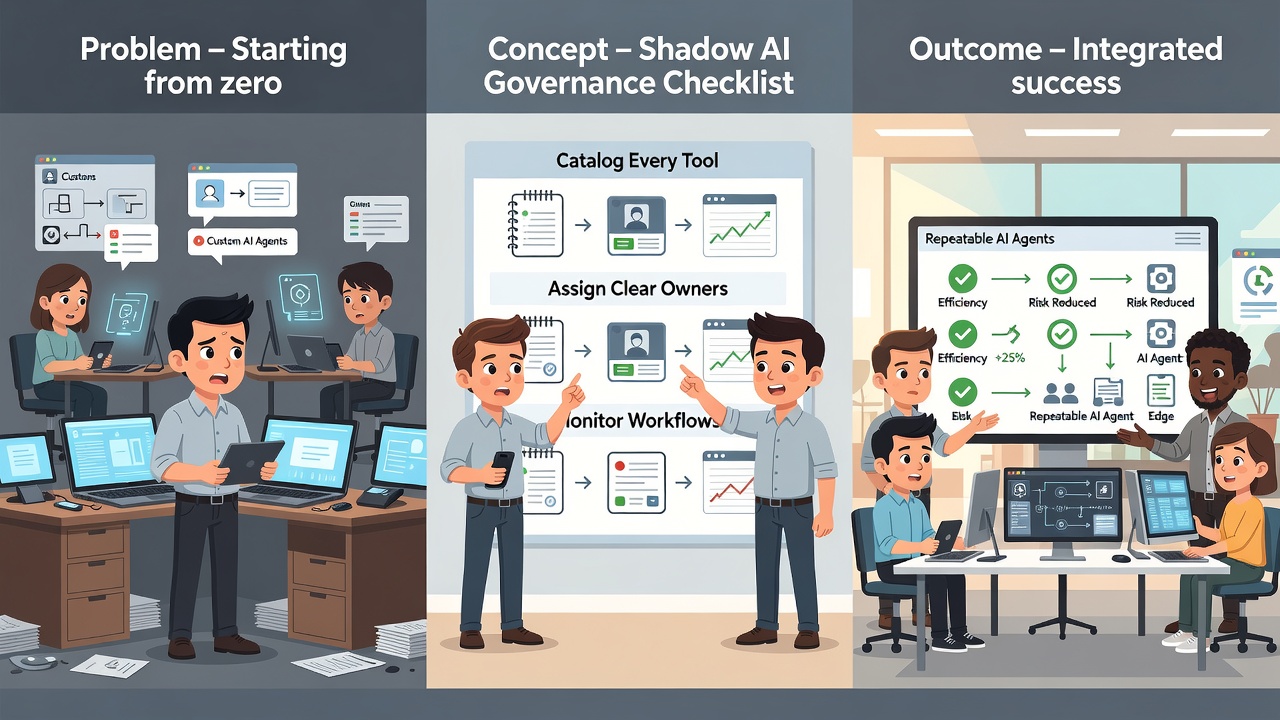
Do not allow staff to add new tools without manager approval. This prevents accidental data leakage through lesser-known platforms. Update the list quarterly and communicate changes in a shared channel. Practical example: A 22-person CPA firm maintains a living document titled “Approved artificial intelligence Tools Q3 2025.” Anyone who wants to test a new model submits a 30-second request form. The operations lead reviews and either adds the tool or explains why it stays off the list. To expand implementation, firms can maintain a shared spreadsheet tracking tool usage metrics, such as time saved on routine tasks like invoice categorization. This data informs future approvals and demonstrates ROI to owners skeptical of artificial intelligence investments. Additionally, restricting to vetted platforms aligns with AICPA recommendations on data security, ensuring SMBs avoid vendor lock-in risks from unvetted startups.
Data Rules: Never Input PII or Client Financials
The single most important clause in any small-team policy is the data-input limit. Sample wording that works across sources reads: “Never input personally identifiable information, client tax data, financial statements, or any confidential client details into public artificial intelligence models.” This rule protects against breaches and aligns with AICPA guidance on client data protection. It also reduces the chance that training data from public models could later surface in unrelated outputs.
Practical example: Instead of pasting a client’s full balance sheet into ChatGPT for ratio analysis, staff export anonymized summary numbers or use a secure internal spreadsheet with built-in formulas. The policy explicitly permits this workaround while banning direct uploads. Further elaboration includes training modules where staff practice anonymization techniques, such as replacing names with placeholders. For accounting firms handling multi-state clients, rules can specify handling of varying privacy laws like CCPA. Monitoring logs of artificial intelligence interactions, even anonymized ones, helps identify accidental violations early, fostering a culture of accountability without invasive surveillance.
Review Requirements: Human Eyes on Every Client-Facing Output
artificial intelligence accelerates drafting, but final responsibility stays with licensed professionals. Policies must state that all AI-generated content intended for clients or regulators requires verification by a qualified team member before delivery. Typical clause: “All artificial intelligence outputs must be reviewed and approved by a licensed professional before they are shared externally. artificial intelligence suggestions are starting points only.” For accounting firms this means every tax return draft, client letter, or financial projection created with artificial intelligence assistance passes through a second human check. The reviewer signs off in the workpaper notes.
Practical example: A tax manager at a 15-person firm now requires juniors to attach the original artificial intelligence prompt and output alongside the reviewed file. The extra step takes two minutes yet creates an audit trail that satisfies both internal quality control and potential regulatory questions. Expanding on this, firms can adopt digital workflow tools like shared drives with version history to automate documentation. This not only meets review standards but also prepares for potential audits by bodies like the PCAOB. Regular spot-checks by partners reinforce the process, turning it into a standard operating procedure rather than an added burden.
Comfort Levels by Task Type: Green, Yellow, Red Framework
Not every task carries the same risk. A simple color-coded system helps staff decide quickly when artificial intelligence is appropriate. Green tasks (high comfort): Brainstorming, general research, summarizing public regulations, drafting internal meeting notes, or generating first-pass email templates. Yellow tasks (medium comfort): Client communications, preliminary financial analysis, or marketing copy. These require light review. Red tasks (low comfort): Final tax filings, regulatory submissions, or any document that will be signed and sent to authorities. These demand full human verification and often should bypass artificial intelligence entirely.
Practical example: Staff at one firm use a shared Slack emoji system. A green checkmark means the task is low risk and can proceed with artificial intelligence. A yellow caution emoji triggers a quick manager ping. A red stop sign means the task moves to traditional methods. To deepen adoption, color-coded charts can be posted in break rooms and digital dashboards, serving as constant reminders. This framework scales across departments, from tax prep to audit support, and can incorporate client-specific risk assessments for complex engagements.
Sample One-Page Policy Template for an Accounting Firm
Title: [Firm Name] Simple artificial intelligence Use Policy
Effective Date: [Insert Date]
Version: 1.0
Purpose
We adopt artificial intelligence tools to improve efficiency while protecting client confidentiality and maintaining professional standards.
Approved Tools
ChatGPT (business account), Microsoft Copilot, Google Gemini. No other tools permitted without written approval.
Data Rules
Never enter PII, client tax IDs, financial statements, or confidential information into any artificial intelligence model. Use anonymized or internal-only data only.
Review Requirements
Every AI-assisted client deliverable must be verified by a licensed CPA or manager before release. Document the review in the client file.
Comfort Levels
Green: Internal research and brainstorming.
Yellow: Draft client emails and preliminary analysis.
Red: Final returns, regulatory filings, and signed opinions. Avoid artificial intelligence or obtain explicit partner sign-off.
Liability and Training
Staff remain responsible for all outputs. Complete the firm’s 20-minute artificial intelligence basics training within 30 days. Report any suspected issues immediately.
Owner Signature: ___________________________ Date: __________
This template can be copied, customized with firm specifics, and distributed the same day.
How SMB Owners Can Implement the Policy in One Hour
Print the one-page template. Gather the team for a 15-minute meeting. Walk through each section with real examples from daily work. Ask two volunteers to customize the approved-tools list and data-rules paragraph. Send the final version by email with a simple acknowledgment reply required. Store the signed copy in the shared drive and schedule a 90-day review. This process closes the policy gap without hiring consultants or purchasing expensive software. To extend impact, integrate policy acknowledgments into annual performance reviews, ensuring ongoing commitment. Owners can also benchmark against peers through industry associations, refining templates based on collective best practices.
Strong Conclusion: Capture Efficiency While Managing Risk
artificial intelligence adoption in small teams is no longer optional, but unmanaged use creates unnecessary exposure. A lightweight, one-page policy gives owners and staff clear guardrails that protect clients, satisfy professional standards, and still allow the speed advantages artificial intelligence provides. Start with the sample accounting-firm template above, adapt it to your workflow, and revisit it quarterly. The firms that act now will gain both productivity and peace of mind. By embedding these policies into daily operations, SMBs position themselves for sustainable growth amid evolving artificial intelligence landscapes.
Sources
- https://www.thefirm.media/articles/ai-policy-accounting-firm-one-page-guide
- https://freistyle.ai/blog/ai-policy-template-small-business
- https://crossing.one/blog/accounting-firm-ai-policy-template-cpa-small-firm-2026
- https://www.rightworks.com/blog/ai-policy-template-accounting-firms/
- https://aiforthework.com/free/ai-policy-template/
- https://aboveboardai.com/resources/ai-policy-template/
- https://www.aicpa-cima.com/resources/download/aicpa-small-firm-generative-artificial-intelligence-ai-policy-template
- https://skopx.com/resources/ai-governance-for-small-teams
- https://smallbizai.au/the-15-minute-win-build-a-simple-ai-policy-for-your-team/
- https://goodtransformer.ai/insights/ai-acceptable-use-policy-clauses/