· The Rapid Architect Team · AI · 8 min read
Budget-Friendly AI Stacks for SMBs: Open Models, Agents & Other Tools with ROI in 2026
Discover how small and medium businesses can build powerful AI stacks for under $300 per month using open models, autonomous agents, and curated tools. This guide delivers practical examples, ROI benchmarks, and 2026-ready strategies tailored for owners generating $500K to $10M in revenue, helping you save dozens of hours weekly without enterprise budgets or IT teams.

Podcast Discussion
Introduction
Introduction: Why 2026 Is the Year SMBs Can Finally Win with artificial intelligence
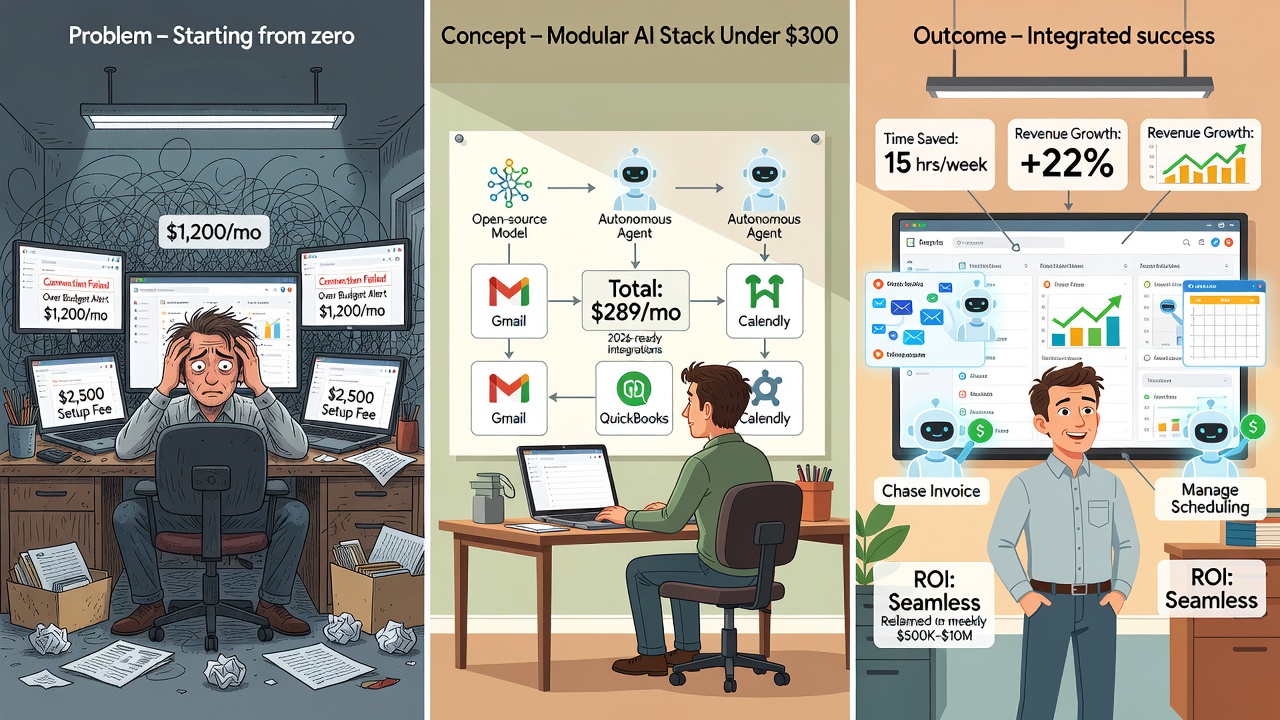
Small and medium business owners often feel squeezed between rising software costs and the promise of artificial intelligence that seems reserved for big corporations. Yet 2026 marks a turning point. Complete artificial intelligence stacks that handle inbox management, scheduling, customer reviews, invoicing, and reporting now run for as little as $49 per month. These solutions replace traditional setups that easily exceed $1,500 to $3,000 monthly when combining legacy software and virtual assistants. In today’s competitive landscape, SMBs generating between $500K and $10M in annual revenue face unique challenges including limited IT resources, tight budgets, and the need for scalable solutions that deliver immediate value without extensive training or infrastructure investments.
Picture a local accounting firm with $1.2 million in annual revenue that currently spends 25 hours weekly on repetitive tasks. By layering a core artificial intelligence assistant with marketing automation and finance workflows, the owner reclaims those hours while generating an extra $4,000 monthly through faster client follow-ups. This is not hype. It is the result of transparent pricing, open-source models, and agentic frameworks designed specifically for teams of 5 to 500 employees. Beyond these immediate gains, adopting such technologies positions SMBs to compete effectively against larger players by automating mundane operations and focusing human talent on strategic initiatives like business development and customer relationship building.
This post breaks down verified-cost stacks, autonomous agent deployments, open-source alternatives, and a shortlist of 10 proven tools. Every recommendation ties directly to measurable returns so you can evaluate options without vendor noise. As we delve deeper, you will discover practical strategies backed by real-world examples from diverse industries including retail, professional services, healthcare, and manufacturing. The emphasis remains on accessibility, ensuring that even non-technical owners can implement these solutions successfully.
Budget-Friendly artificial intelligence Stacks with Verified Monthly Costs Under $300
Research shows that focused combinations of six to eight tools outperform sprawling ecosystems of 100-plus applications. The key lies in choosing platforms that integrate through simple OAuth connections with software you already use, such as Gmail, QuickBooks, or Calendly. These integrations minimize setup time and reduce the learning curve, allowing teams to achieve productivity boosts within days rather than weeks.
One standout option is Fleece artificial intelligence Starter, which delivers a complete stack covering the core operations listed above for $49 monthly. A retail store owner using this platform reported replacing three separate subscriptions plus a part-time virtual assistant, cutting monthly overhead from $2,100 to $49 while maintaining the same output level. This dramatic reduction highlights how modern artificial intelligence tools consolidate functionalities that previously required multiple disparate services, leading to streamlined operations and fewer points of failure.
Layered approaches work best. Start with a core assistant for daily coordination, add a marketing module for review responses and social posts, include a workflow layer for approvals, and finish with finance automation for invoicing and reporting. This structure ensures components communicate rather than operate in isolation. Traditional stacks often hide fees for data syncing or user seats. In contrast, 2026 budget options publish clear pricing and cap usage so you never face surprise bills. For businesses in the $500K to $10M range, these savings compound quickly. A consulting firm tracking 18 hours saved weekly at an effective rate of $75 per hour sees more than $5,000 in monthly value from a $99 stack. Additional benefits include improved data accuracy, reduced human error in routine processes, and the ability to scale operations without proportional increases in headcount.
SMB artificial intelligence Agent Stacks and Autonomous Operations in 2026
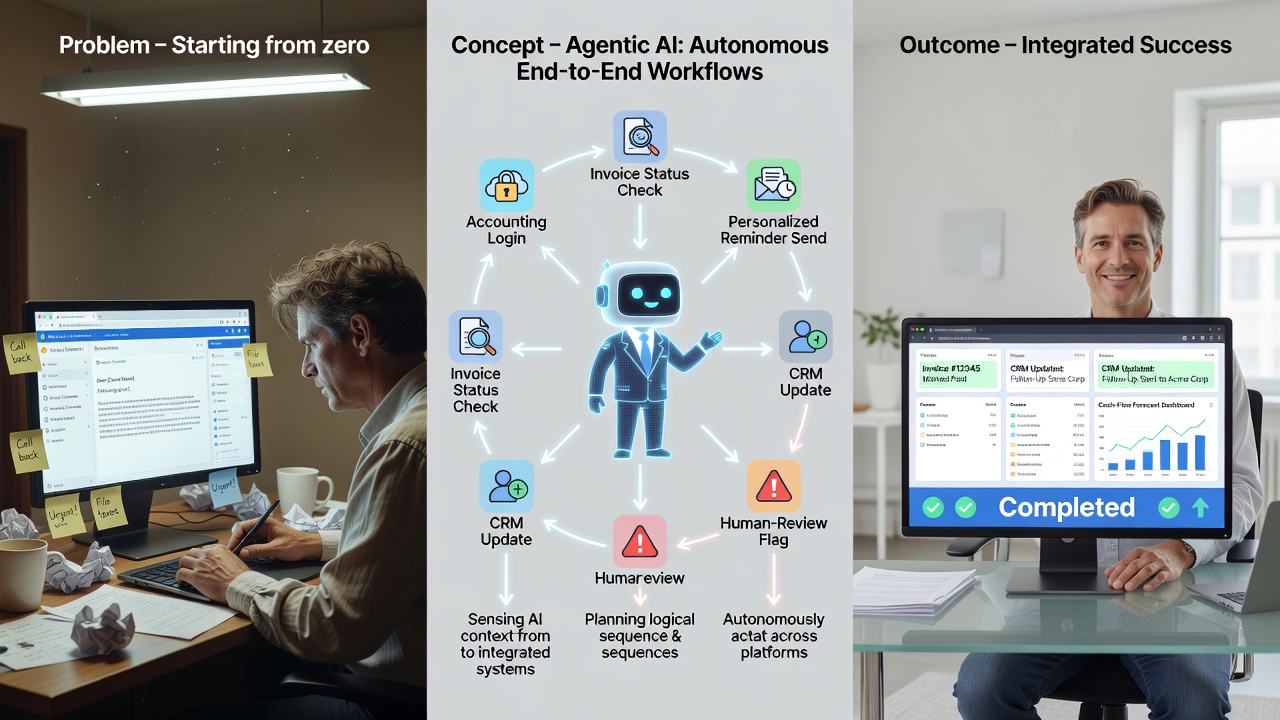
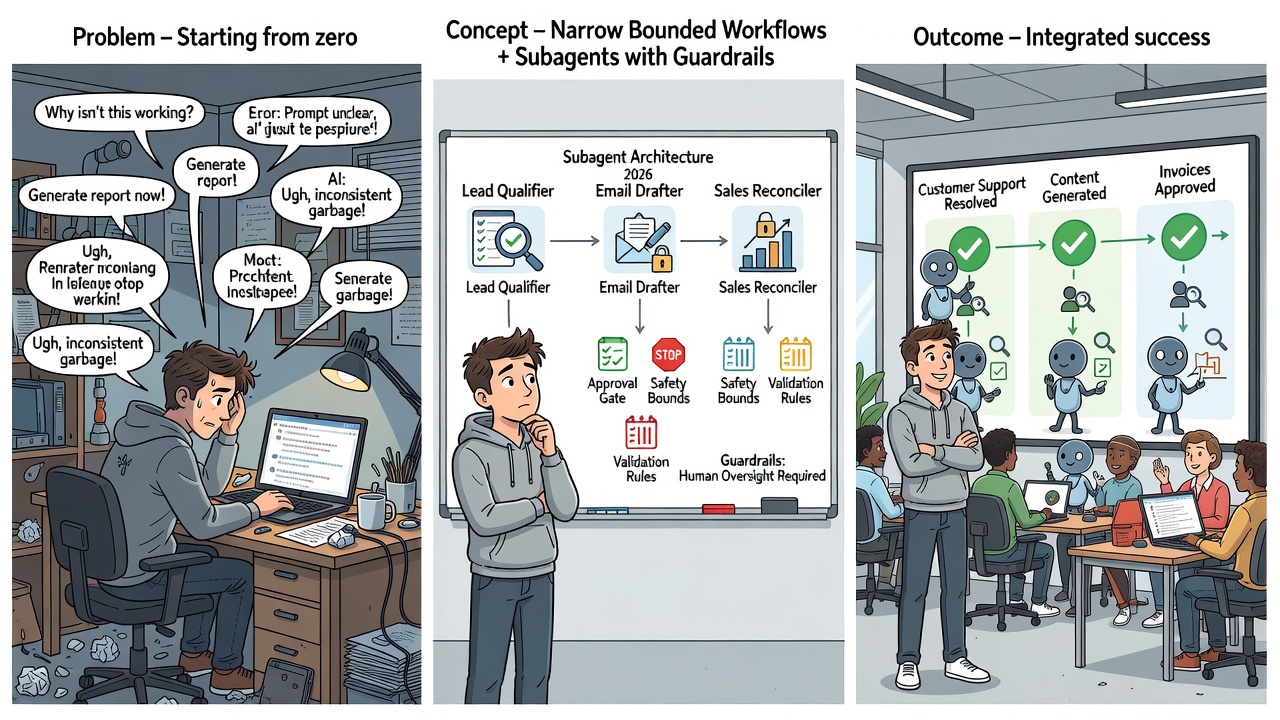
Agentic artificial intelligence moves beyond simple chatbots to handle multi-step processes independently. Deployment guides now exist for small teams to automate high-volume tasks such as appointment rescheduling, invoice chasing, and lead qualification. These agents operate continuously, providing 24/7 responsiveness that enhances customer satisfaction and operational efficiency.
One verified framework starts with a single agent monitoring your inbox for common requests, then escalates only exceptions to a human. A dental practice with 12 employees implemented this and reduced front-desk workload by 30 hours weekly. The same agent later expanded to follow up on unpaid invoices, improving cash flow by 12 percent within the first quarter. Transparent strategies emphasize phased rollouts. Begin with one agent on scheduling, measure results for 30 days, then add invoicing automation. ROI calculation templates help track hours saved alongside revenue generated from faster response times. Data indicates that 76 percent of vendor materials previously misrepresented true agentic pipeline costs, making these open frameworks especially valuable for budget-conscious owners.
Autonomous operations shift teams from reactive firefighting to proactive growth activities. A landscaping company using agent stacks reported that owners now spend two extra days each month on business development instead of paperwork, directly contributing to a 15 percent revenue increase over six months. Furthermore, these systems foster better work-life balance for owners and employees alike by offloading repetitive duties, ultimately leading to higher retention rates and a more engaged workforce.
Open-Source Models and Cost-Efficient artificial intelligence for Growing Businesses
Frontier API costs can escalate unpredictably as usage grows. Open-source models supported by tools like LiteLLM offer a stable alternative that keeps sensitive data under your control and avoids per-token surprises. Decision tables in current guides help SMBs compare options based on privacy requirements and team size. For routine tasks such as drafting proposals or summarizing meeting notes, open models deliver performance comparable to paid APIs at a fraction of the long-term cost.
A manufacturing supplier with 45 employees switched its internal reporting system to an open-source stack and reduced annual artificial intelligence spend from $8,400 to under $1,200 while improving data security compliance. The 2026 inflection point is clear: non-technical users can now deploy these models through managed interfaces without writing code. Privacy-focused businesses in healthcare or finance benefit most, as data never leaves their infrastructure. When scaling headcount, open models maintain predictable expenses that grow linearly rather than exponentially. This predictability supports long-term financial planning and allows SMBs to allocate resources toward innovation and market expansion instead of unpredictable tech expenditures.
Curated Tool Lists and Practical ROI Benchmarks
Filtering from more than 6,500 marketed artificial intelligence tools leaves a shortlist of approximately 10 solutions with documented SMB adoption. Selection criteria focus on time savings, revenue lift, and seamless integration rather than feature checklists. Examples include inbox and review management agents that respond to routine queries in under two minutes, scheduling tools that sync across calendars and reduce no-shows by 22 percent, and finance automation that flags anomalies in real time and accelerates collections.
ROI benchmarks tie to operational metrics. One e-commerce store tracked a 9 percent revenue increase after deploying review-response automation, attributing it to higher repeat purchase rates. Another service business measured 42 hours saved monthly across three staff members, equating to $3,150 in recovered productivity at their blended hourly rate. Owners should test 6-to-8-tool combinations first, then expand only after confirming impact within 60 days. This disciplined approach prevents the common trap of paying for unused capabilities while ensuring alignment with specific business goals and industry regulations.
Step-by-Step Implementation Guide for SMB Decision Makers
- Audit current subscriptions and identify overlaps in inbox, scheduling, and finance tools.
- Select a core platform under $50 monthly that connects to your existing apps via OAuth.
- Deploy one autonomous agent on the highest-volume repetitive task, such as appointment confirmations.
- Track baseline metrics for hours spent and revenue generated over 30 days.
- Layer additional modules only after proving positive ROI.
- Consider open-source paths when monthly token usage exceeds 500,000 or data privacy concerns arise.
A veterinary clinic followed this sequence and achieved full payback on its $149 stack within 23 days through time savings alone. By following these steps methodically, SMBs can minimize risks associated with technology adoption and build internal expertise gradually.
Measuring and Maximizing ROI in 2026
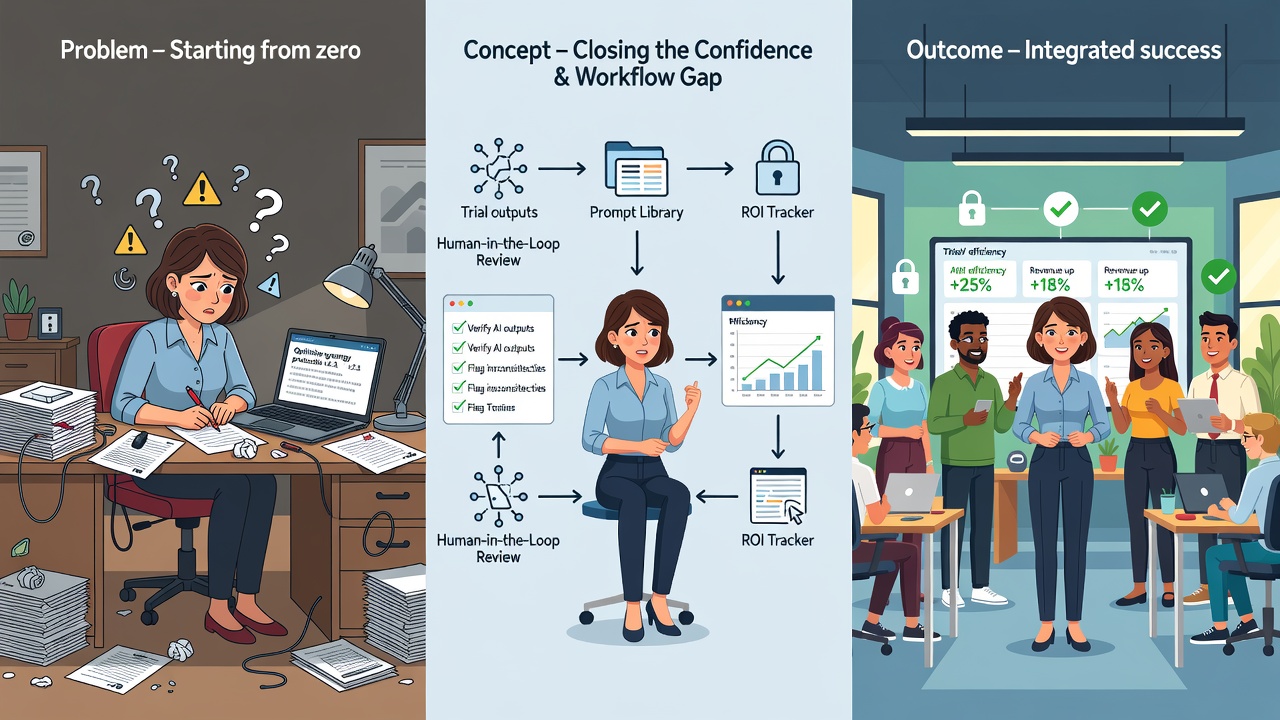
Track two primary metrics: hours reclaimed per week and incremental revenue from faster operations. Convert hours to dollar value using your fully loaded labor cost, then compare against stack subscription fees. Most SMBs see payback periods under 45 days when starting small. Revisit the stack quarterly. As your business grows, evaluate whether open-source models become more attractive than managed APIs. Document wins and share them with your team to build internal momentum for further adoption. Regular reviews also uncover opportunities for optimization, such as integrating emerging features or refining agent prompts for even greater efficiency.
Conclusion: Position Your SMB for Competitive Advantage
Budget-friendly artificial intelligence stacks are no longer experimental. With complete solutions available under $50 monthly, autonomous agents that save dozens of hours weekly, and mature open-source options, 2026 offers SMBs an unprecedented opportunity to operate more efficiently than ever before. The businesses that act now by testing focused 6-to-8-tool combinations will gain lasting advantages in speed, cost control, and customer responsiveness. Start today with one integrated platform. Measure results rigorously. Expand only when ROI is proven. Your competitors are already exploring these options. The question is whether you will lead or follow. Embracing these technologies today ensures sustainable growth and resilience in an increasingly AI-driven economy.
Sources
- https://fleeceai.app/blog/small-business-ai-stack-under-50-month-2026
- https://workflowstackai.com/blog/smb-ai-stack-2026
- https://www.cobbcpa.com/build-ai-stack-small-business/
- https://thebizai.co/ai-tools-small-business-2026
- https://metadatamarketer.com/smb-ai-agent-stack-2026/
- https://riyakadev.com/blog/ai-agents-small-business-2026.html
- https://neuralcoretech.com/smb-ai-strategy-agentic-ai-2026/
- https://explainx.ai/blog/go-open-source-ai-business-guide-2026
- https://ailearningguides.com/small-business-ai-2026-stack-tools-costs-roi-guide/
- https://www.thesmbhub.com/blog/ai-tools-small-business-2026/