· The Rapid Architect Team · AI · 11 min read
AI Playbooks for SMBs: Your Complete Guide to Getting Started in Marketing, HR, Finance, and Customer Service
Discover exactly where to start with AI for your small or medium business. This comprehensive playbook covers the top use cases in marketing, HR, finance, and customer service—with specific strategies for retail, professional services, and other SMB niches. Learn the 30-90 day implementation framework that's helping businesses save 8-12 hours per week while driving revenue growth.
Podcast Discussion
Introduction
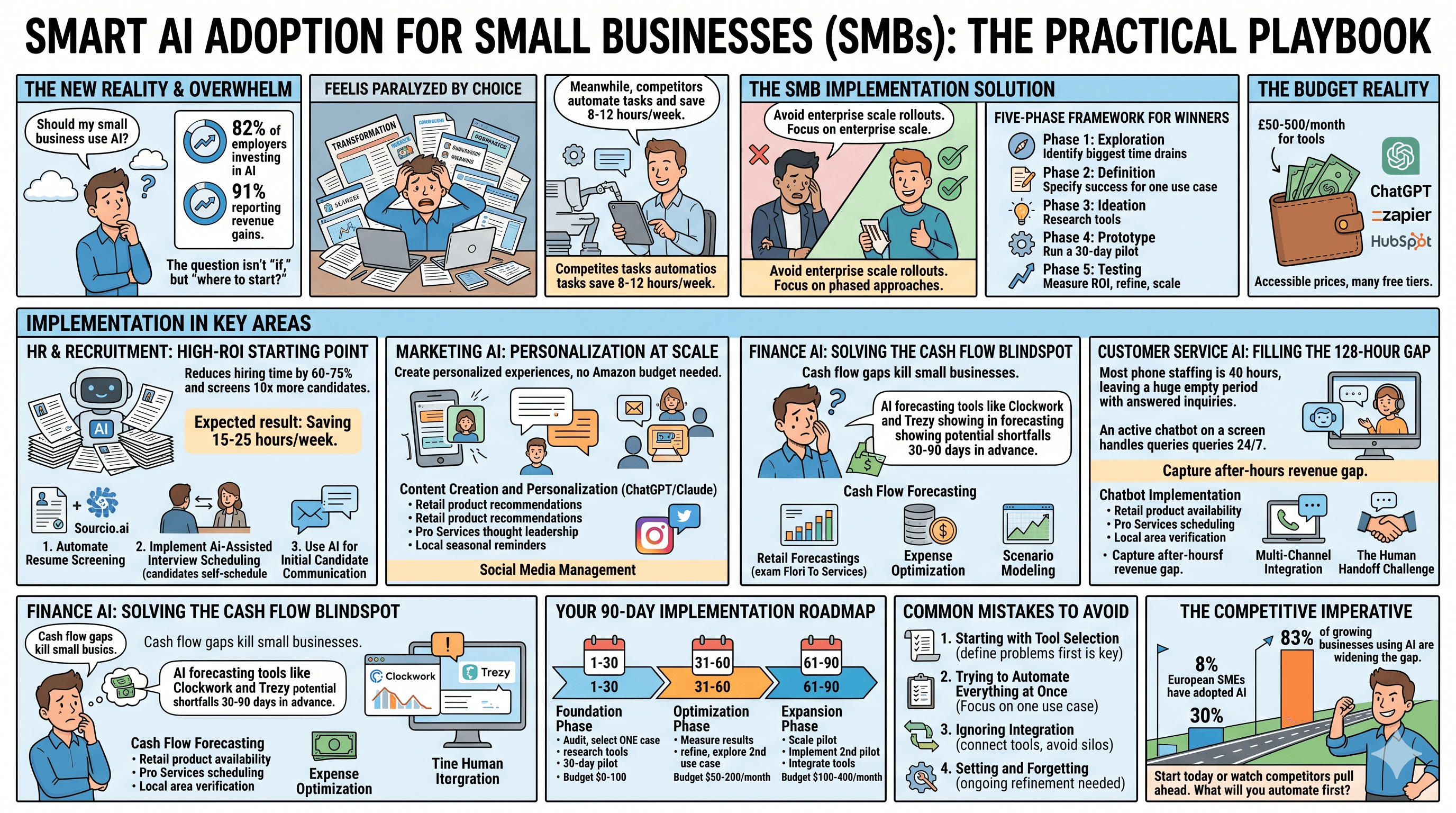
The conversation has shifted. It’s no longer about whether your small business should adopt artificial intelligence—it’s about how quickly you can execute. With 82% of small business employers now investing in artificial intelligence tools and 91% of those using artificial intelligence reporting revenue increases, the question isn’t “if” but “where do I start?”
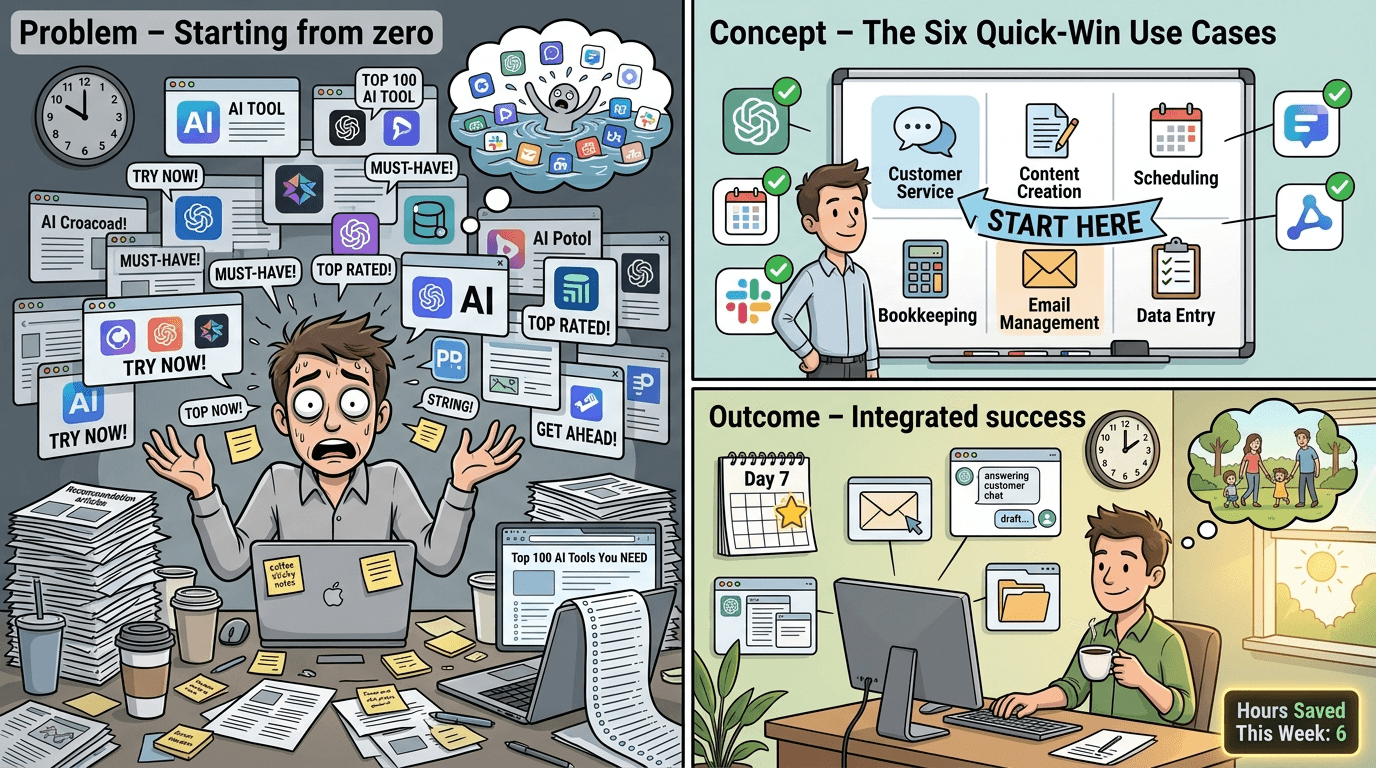
Here’s the reality most SMB owners face: you’re drowning in options, overwhelmed by promises of transformation, and paralyzed by the fear of choosing wrong. Meanwhile, your competitors are quietly automating the repetitive tasks that eat 8-12 hours of your week.
This playbook cuts through the noise. Whether you run a retail shop, a professional services firm, or a local service business, you’ll find specific, actionable strategies for implementing artificial intelligence in the four areas that matter most: marketing, HR, finance, and customer service. No fluff. No enterprise-level budgets required. Just practical frameworks you can implement in the next 90 days.
The SMB Implementation Problem (And How to Solve It)
Most small business owners fail at artificial intelligence adoption not because of the technology—but because of the approach. They either overspend on tools they’re not ready for or stall indefinitely at the research stage. Sound familiar?
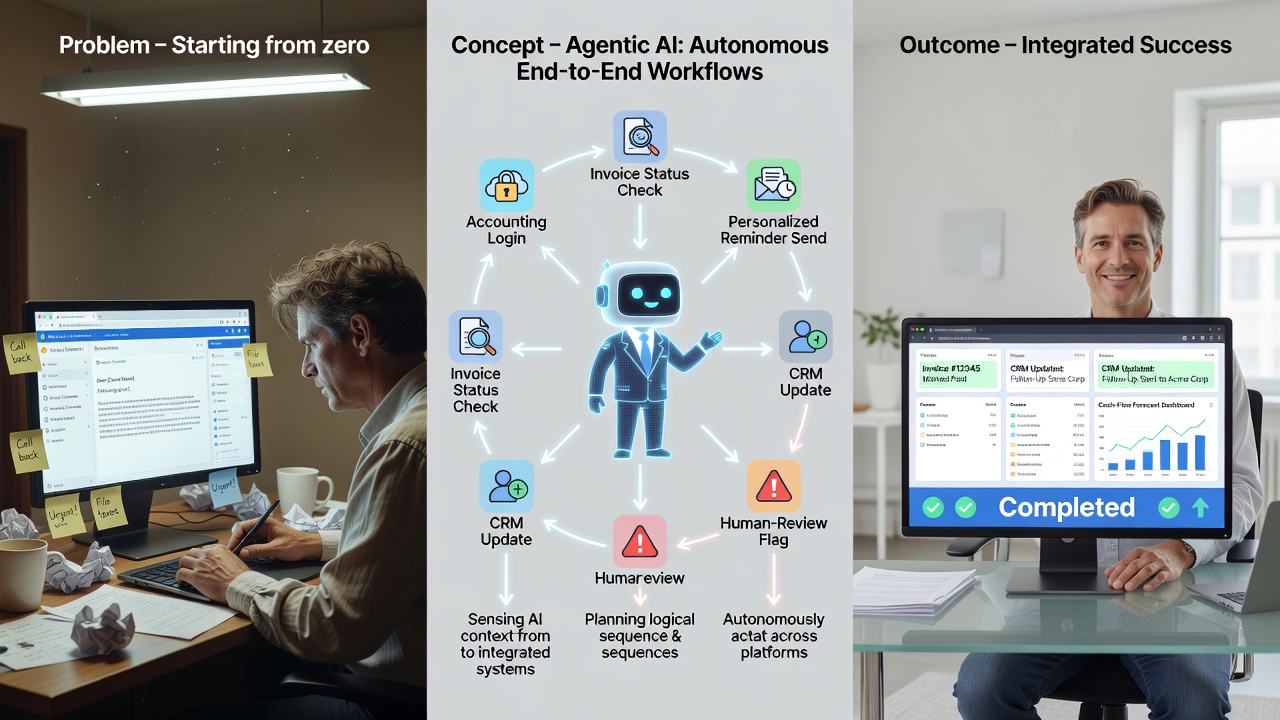
The winning formula isn’t complicated: successful SMB adopters follow phased approaches with 30-90 day pilots rather than attempting enterprise-scale rollouts. They build a tight stack of 5-8 tools integrated into existing workflows. And critically, they start with process mapping before tool selection.
Here’s the five-phase framework that separates winners from the 60-day failures:
Phase 1: Exploration – Identify your biggest time drains and pain points Phase 2: Definition – Specify exactly what success looks like for one use case Phase 3: Ideation – Research tools that solve your specific problem Phase 4: Prototype – Run a 30-day pilot with clear metrics Phase 5: Testing – Measure ROI, refine, then scale or expand
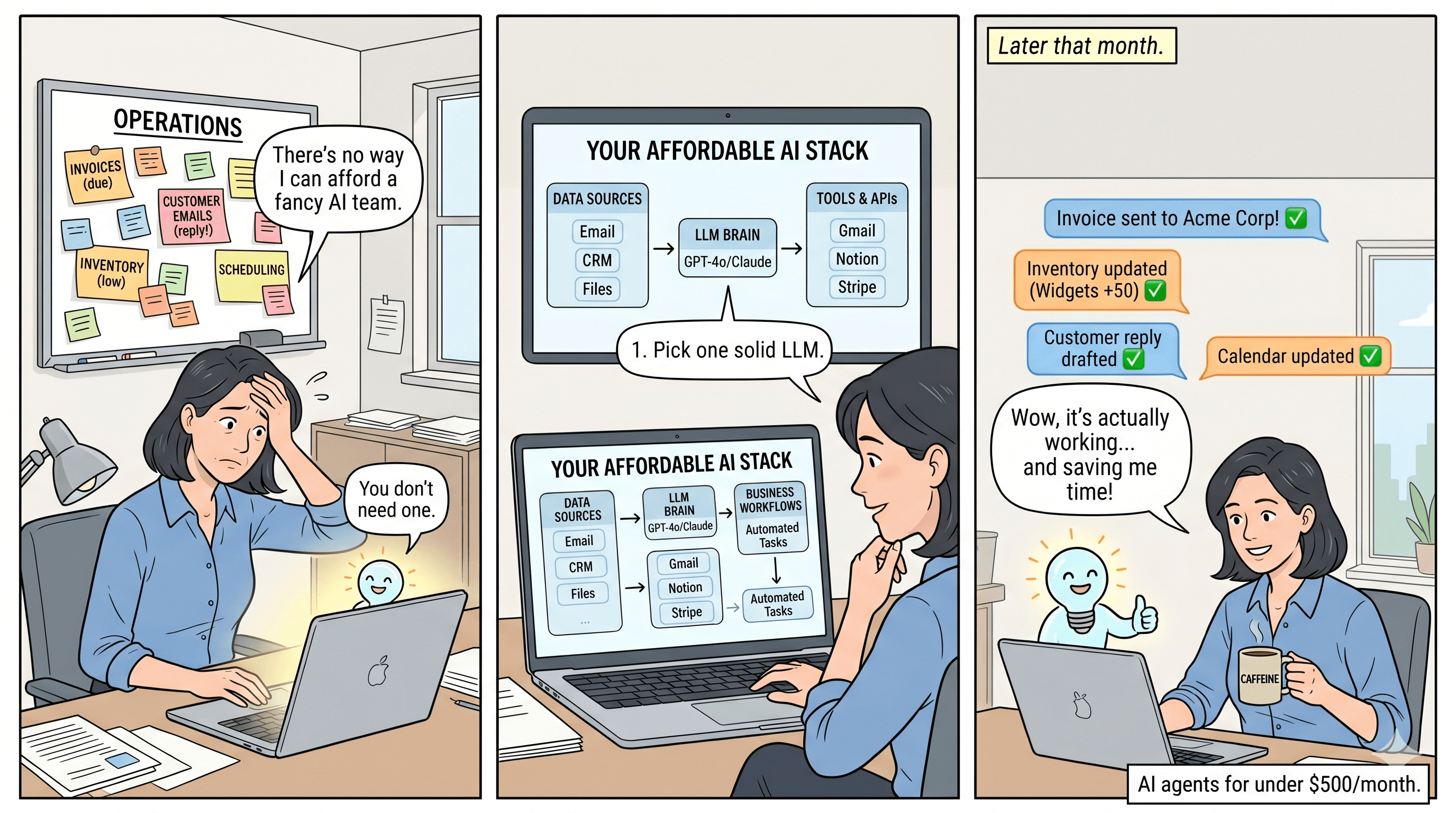
The budget reality is more accessible than you might think. Research shows integration costs of £50-500 per month for tools like ChatGPT, Zapier, and HubSpot. Many artificial intelligence finance and HR tools offer free tiers to start.
HR and Recruitment: The High-ROI Starting Point
If you’re looking for the fastest return on your artificial intelligence investment, start with recruitment. Here’s why: the average time-to-hire has reached an all-time high of 44 days, and most SMBs don’t have dedicated HR teams to manage the flood of applications.
artificial intelligence recruitment screening reduces hiring time by 60-75% and can screen 10x more candidates in the same timeframe. For a retail business hiring seasonal staff or a professional services firm seeking specialized talent, this translates to weeks of saved time and significantly better hiring decisions.
The Recruitment artificial intelligence Playbook for SMBs:
Step 1: Automate Resume Screening Tools like HireForge and Sourcio.ai can filter initial applicants before human review. These platforms scan for keywords, qualifications, and experience matches—eliminating the hours spent manually reviewing unqualified candidates.
For a retail business hiring for customer-facing roles, configure your screening to prioritize communication skills, availability flexibility, and relevant retail experience. For professional services, weight technical qualifications and industry-specific certifications more heavily.
Step 2: Implement AI-Assisted Interview Scheduling Once candidates pass initial screening, artificial intelligence scheduling tools eliminate the back-and-forth email chains. Integration with your calendar means candidates self-schedule within your available windows.
Step 3: Use artificial intelligence for Initial Candidate Communication Automated responses keep candidates engaged while you focus on running your business. Template-based artificial intelligence communication can handle application confirmations, status updates, and basic FAQs about the role.
Expected Results: SMBs implementing this stack report saving 15-25 hours per week on recruitment screening, payroll processing, and scheduling combined. As one industry analysis noted, “artificial intelligence has leveled the playing field against large corporations. No massive HR team required.”
Niche-Specific Applications:
Retail: Focus on high-volume seasonal hiring automation. Set up artificial intelligence screening to handle 50+ applications simultaneously, filtering for availability during peak shopping periods.
Professional Services: Configure artificial intelligence to verify credentials, certifications, and professional references. Use natural language processing to assess written communication quality in cover letters.
Local Services (Plumbing, HVAC, Landscaping): Screen for required licenses, geographic proximity, and relevant trade experience. artificial intelligence can verify certification validity through database integrations.
Marketing artificial intelligence: Personalization at Scale
The days of spray-and-pray marketing are over. SMB customers now expect the same personalized experiences they get from Amazon and Netflix—but you don’t need an Amazon budget to deliver them.
The Marketing artificial intelligence Playbook for SMBs:
Content Creation and Personalization ChatGPT and Claude have become essential tools for SMB content creation. But the real power comes from using these tools strategically—not just generating generic blog posts, but creating personalized content for different customer segments.
For Retail Businesses:
- Use artificial intelligence to analyze purchase history and generate personalized product recommendations
- Create targeted email campaigns based on browsing behavior and past purchases
- Generate product descriptions that highlight benefits relevant to specific customer personas
For Professional Services:
- Develop thought leadership content tailored to specific industries you serve
- Create case study frameworks that artificial intelligence can populate with client-specific details
- Generate proposal templates customized to prospect pain points
For Local Service Businesses:
- Create neighborhood-specific marketing content that references local landmarks and community events
- Generate seasonal service reminders personalized to each customer’s service history
- Develop before-and-after content for social proof
Email Marketing Automation AI-powered email platforms now offer predictive send times, subject line optimization, and automated segmentation. A landscaping company might set up automated nurture sequences that adjust based on season, service history, and property type.
Social Media Management Tools can now analyze your best-performing content and suggest optimal posting times, hashtags, and content themes. For an SMB, this means professional-level social media presence without hiring a dedicated social media manager.
Quick Win Implementation: Start with email personalization. Most SMBs already have email lists and basic email marketing tools. Adding AI-powered subject line testing and send-time optimization costs nothing extra with many platforms and can improve open rates by 20-30%.
Finance artificial intelligence: Solving the Cash Flow Blindspot
Here’s the uncomfortable truth most SMB owners know too well: you can be profitable on paper and broke in the bank. The gap between invoiced revenue and actual cash flow has killed more small businesses than bad products ever will.
artificial intelligence financial tools now connect directly to QuickBooks, Xero, and payment processors to provide real-time forecasting, cash flow analysis, and scenario modeling—without requiring dedicated finance teams or complex implementations.
The Finance artificial intelligence Playbook for SMBs:
Cash Flow Forecasting Tools like Clockwork and Trezy connect to your existing accounting software and automatically generate cash flow projections. Instead of discovering a cash crunch when it’s too late, you’ll see potential shortfalls 30-60-90 days in advance.
For Retail: artificial intelligence can correlate your cash flow with seasonal patterns, inventory cycles, and historical sales data. A retail business preparing for holiday season can model different inventory investment scenarios and see exactly how each affects cash position.
For Professional Services: Project-based businesses benefit from artificial intelligence that tracks receivables aging and predicts payment timing based on client history. If a client typically pays at 45 days despite 30-day terms, your forecast reflects reality rather than aspirations.
For Local Services: Weather-dependent businesses like landscaping or HVAC can connect artificial intelligence forecasting to historical weather pattern data, predicting both revenue fluctuations and associated cash flow impacts.
Expense Optimization artificial intelligence accounting tools can now categorize expenses automatically, flag unusual spending patterns, and identify subscription creep before it drains your margins. Many SMBs discover they’re paying for software subscriptions they no longer use or vendor contracts that auto-renewed at higher rates.
Scenario Modeling What happens to your cash position if your biggest client delays payment by 30 days? What if you need to hire two new employees? artificial intelligence tools allow you to model these scenarios instantly, turning financial planning from a quarterly exercise into an ongoing decision-support system.
Budget Reality: Many artificial intelligence finance tools offer free tiers that provide basic forecasting and analysis. Paid tiers typically range from $50-200 per month—a fraction of what you’d pay a part-time bookkeeper for similar insights.
Customer Service artificial intelligence: Filling the 128-Hour Gap
Here’s a number that should concern every SMB owner: your phone lines are staffed maybe 40 hours per week, leaving 128 hours where customer inquiries go unanswered. Meanwhile, 62% of consumers now prefer messaging a business over calling.
That’s not just a service gap—it’s a revenue gap. Every after-hours inquiry that goes unanswered is a potential customer choosing your competitor who responds first.
The Customer Service artificial intelligence Playbook for SMBs:
Chatbot Implementation for Different Business Types
For Retail: Configure your chatbot to handle product availability questions, store hours, return policies, and basic order tracking. When customers ask about specific products, the artificial intelligence can provide specifications, availability, and even suggest complementary items.
Implementation approach:
- Start with FAQ automation covering your 20 most common questions
- Add product catalog integration for inventory inquiries
- Implement handoff protocols for complex issues requiring human attention
For Professional Services: Your chatbot should handle appointment scheduling, basic service descriptions, pricing inquiries, and qualification questions. A law firm might use artificial intelligence to conduct initial intake, gathering case details before a human attorney reviews.
Implementation approach:
- Automate consultation scheduling with calendar integration
- Create decision trees for service qualification
- Develop automated follow-up sequences for leads who don’t immediately book
For Local Services: Service area confirmation, availability checking, and quote request intake are perfect chatbot use cases. A plumbing company’s artificial intelligence can gather problem details, photos, and urgency level before dispatching the appropriate technician.
Implementation approach:
- Build service area verification into initial chatbot conversation
- Create problem-type decision trees that gather relevant diagnostic information
- Implement emergency escalation protocols for urgent issues
Multi-Channel Integration Modern customer service artificial intelligence doesn’t just live on your website. Integration with Facebook Messenger, Instagram DMs, WhatsApp, and SMS means customers can reach you through their preferred channel—and receive consistent, immediate responses regardless of platform.
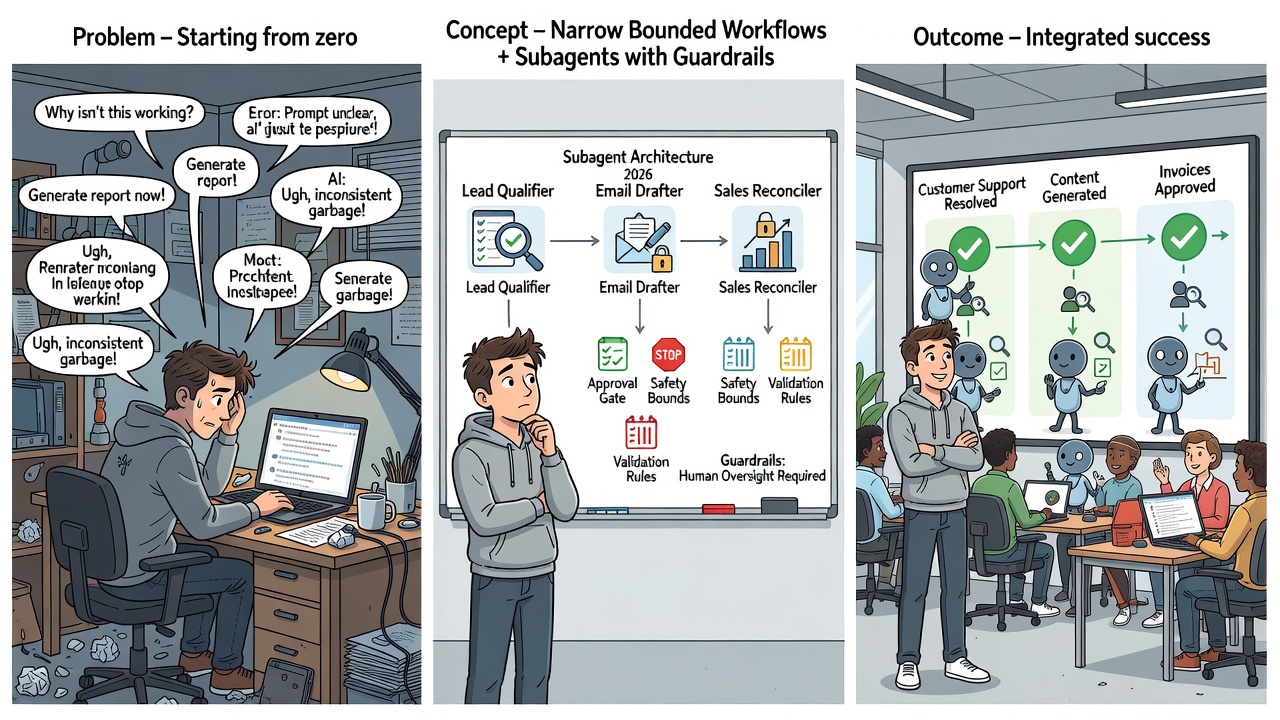
The Human Handoff Challenge The best artificial intelligence implementations know when to bring in humans. Configure clear escalation triggers for emotional customers, complex technical issues, or high-value opportunities. Your artificial intelligence should enhance human customer service, not replace it entirely.
Quick Win Implementation: Start with a basic FAQ chatbot covering your business hours, location, services, and pricing. This can be implemented in a weekend using readily available platforms, and immediately captures after-hours inquiries that would otherwise be lost.
Your 90-Day Implementation Roadmap
Theory without action is just entertainment. Here’s your concrete timeline for implementing artificial intelligence across your business:
Days 1-30: The Foundation Phase
- Audit your biggest time drains across marketing, HR, finance, and customer service
- Select ONE high-impact use case (recommendation: customer service chatbot or recruitment screening)
- Research 2-3 tools for your selected use case
- Implement a 30-day pilot with clear success metrics
- Budget: $0-100 for free trials and basic plans
Days 31-60: The Optimization Phase
- Measure pilot results against baseline
- Document what’s working and what isn’t
- Refine workflows based on real usage data
- Begin exploring second use case while maintaining first
- Budget: $50-200/month for proven tools
Days 61-90: The Expansion Phase
- Scale initial pilot if successful or pivot if not
- Implement second use case pilot
- Begin integration between tools (e.g., chatbot leads flowing to CRM)
- Document processes for team training
- Budget: $100-400/month for integrated tool stack
Recommended Starter Stack:
- ChatGPT or Claude for content creation and analysis
- Zapier for automation and tool integration
- One vertical-specific tool for your highest-priority use case
- Your existing accounting software with artificial intelligence features enabled
Total monthly investment: $100-300 for a complete starter stack.
Common Mistakes to Avoid
Mistake 1: Starting with Tool Selection Most SMB owners browse tools before defining problems. Successful implementation follows the five-phase framework: Exploration, Definition, Ideation, Prototype, Testing. Skip this, and 60-day failure is typical.
Mistake 2: Trying to Automate Everything at Once The SMBs seeing real ROI focus on one use case at a time. Master customer service chatbots before adding AI-powered marketing. Nail recruitment screening before implementing financial forecasting.
Mistake 3: Ignoring Integration Standalone tools create data silos. From the start, consider how your artificial intelligence tools will connect to existing systems. A chatbot that doesn’t feed into your CRM is a missed opportunity.
Mistake 4: Setting and Forgetting artificial intelligence tools require ongoing refinement. Your chatbot needs regular review of failed conversations. Your marketing artificial intelligence needs feedback on what’s converting. Budget time for optimization, not just implementation.
The Competitive Imperative
With only 8% of European SMEs having adopted artificial intelligence compared to 30% of large enterprises, there’s still a significant first-mover advantage available. But that window is closing. The 83% of growing businesses already using artificial intelligence aren’t waiting—they’re widening the gap.
The tools are affordable. The implementation frameworks are proven. The ROI is documented. The only variable is whether you start today or watch your competitors pull ahead.
Your first move: Identify the single use case that costs you the most time or loses you the most customers. Implement a 30-day pilot. Measure the results. Then expand.
The businesses winning with artificial intelligence aren’t necessarily the most sophisticated or well-funded. They’re the ones who started with one focused use case, proved the value, and built from there. Your playbook is ready. The only question is: what will you automate first?
Sources
- SBE Council Survey - https://sbecouncil.org/2026/04/25/the-ai-tools-small-businesses-are-using/
- Tested Media Playbook - https://tested.media/ai-for-business/
- Hyperion SME Guide - https://hyperion-consulting.io/en/resources/ai-for-smes-guide
- InsiderAITrends 5-Phase Framework - https://www.insideraitrends.com/blog/how-to-start-with-ai-in-your-company-5-phase-framework-smb-2026/
- Kersai Strategy Guide - https://kersai.com/how-to-build-ai-strategy-for-your-business-2026-complete-guide/
- PathOpt 30-Day Pilot - https://www.pathopt.com/blog/30-day-ai-pilot-playbook-smb-owners
- HireForge Resume Screening - https://www.hireforge.ai/articles/complete-guide-ai-resume-screening-smb
- Chambers Talent Tools - https://chamberstalent.com/blog/7-best-ai-recruiting-tools-for-small-businesses-in-2026/
- SeptemAI HR Automation - https://septemai.com/blog/ai-automation-hr-departments-small-business-uk-2026
- SeptemAI Recruitment Screening - https://septemai.com