· The Rapid Architect Team · AI · 12 min read
The SMB Advantage: Why Smaller Businesses Can Win the AI Compliance Race
Discover how AI is transforming compliance, finance, and operations for small and medium businesses. Learn why SMBs may actually be better positioned than large enterprises to benefit from agentic AI tools—and get a practical 90-day roadmap for implementation.
Podcast Discussion
Introduction
How artificial intelligence is leveling the playing field in compliance, finance, and operations—and why agile businesses should act now
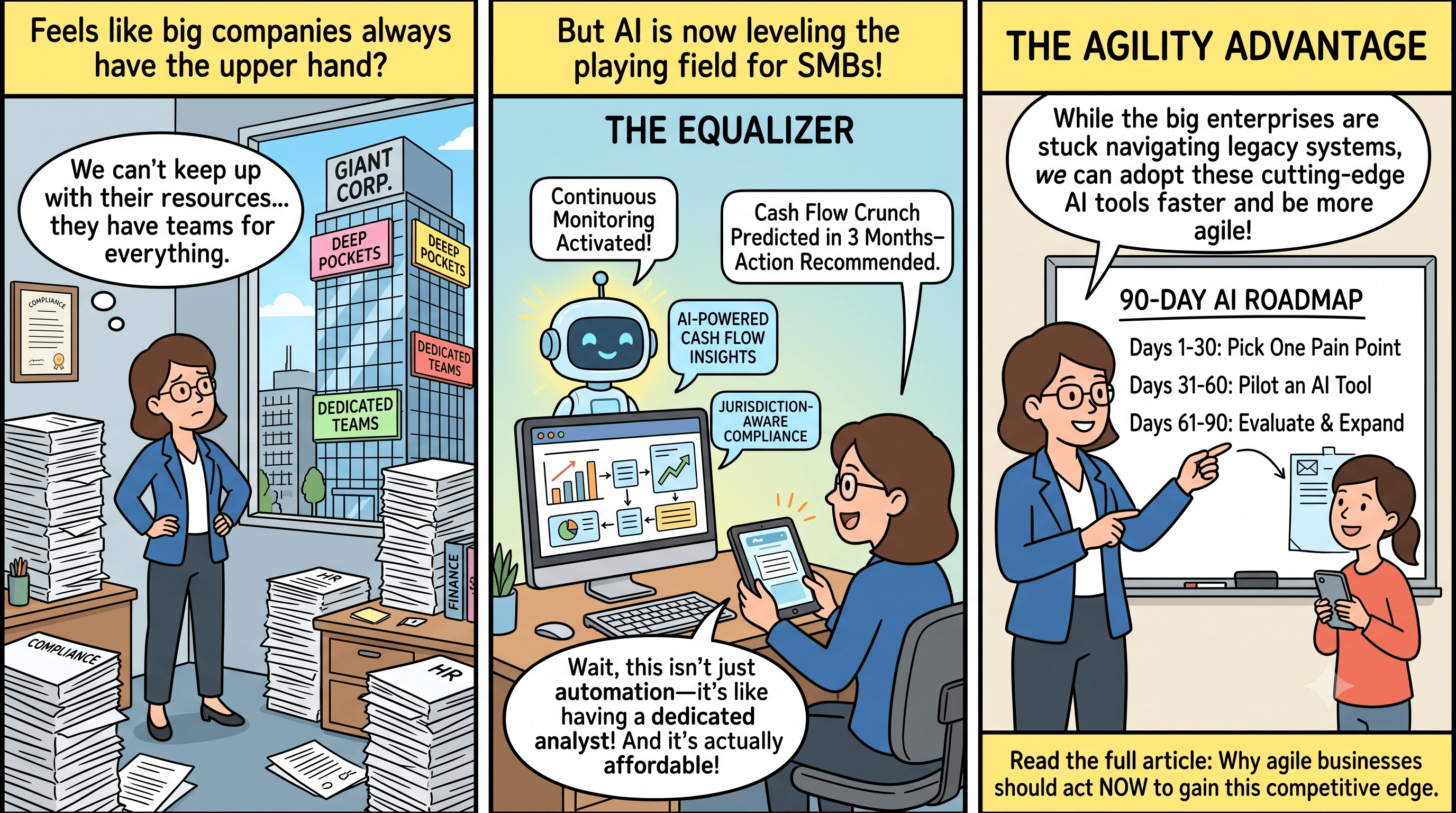
Running a small or medium-sized business often feels like competing in a race where larger companies have better equipment, bigger teams, and deeper pockets. Nowhere is this more apparent than in compliance, finance, and HR operations—areas traditionally requiring expensive consultants, dedicated departments, and enterprise-grade software that most SMBs simply couldn’t afford.
But here’s the counterintuitive truth emerging in 2026: smaller businesses may actually be better positioned to win the artificial intelligence compliance race than their Fortune 500 competitors.
While large enterprises cautiously navigate legacy systems, lengthy procurement cycles, and internal resistance to change, agile SMBs can adopt cutting-edge artificial intelligence tools faster, more flexibly, and often at a fraction of the expected cost. The technology that once separated the haves from the have-nots is now democratizing at an unprecedented pace.
This comprehensive guide explores how artificial intelligence is transforming compliance, finance, and operations for small and medium businesses—and provides practical strategies for leveraging these tools to gain a competitive edge.
The New artificial intelligence Paradigm: From Cost-Cutter to Decision Engine
For years, the business case for artificial intelligence centered almost exclusively on cost reduction. Automate repetitive tasks, eliminate positions, cut overhead. This narrative made many SMB owners skeptical—after all, their competitive advantage often lies in personal relationships and human expertise, not in having the most automated processes.
That narrative is changing dramatically. According to KPMG’s Global artificial intelligence in Finance 2026 Report, artificial intelligence is now positioned as a “decision-engine rather than just a cost lever” [4]. This reframing matters enormously for smaller organizations.
Think about what this means in practice. Instead of simply automating invoice processing to save a few hours per week, AI-powered finance tools now analyze cash flow patterns, predict seasonal fluctuations, flag unusual transactions, and recommend strategic decisions. A small manufacturing company can access the same analytical capabilities that major corporations spent millions developing—often through affordable subscription models or even free platforms.
The shift from cost-cutting tool to decision engine aligns perfectly with how successful SMBs actually operate. Most small business owners don’t need artificial intelligence to eliminate their bookkeeper; they need artificial intelligence to help their bookkeeper spot the cash flow crunch coming three months before it becomes a crisis. They need tools that enhance human judgment, not replace it.
Understanding Agentic artificial intelligence: Your New Autonomous Assistant
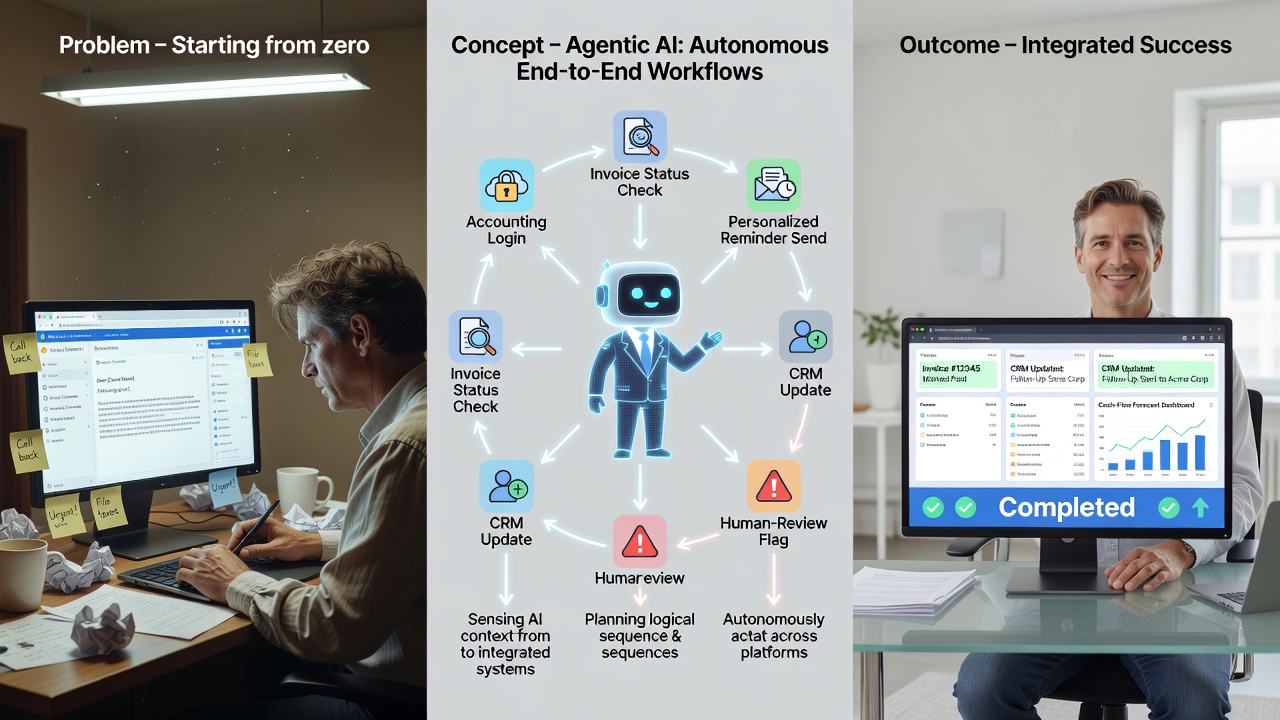
The biggest buzzword in business technology for 2026 is “agentic artificial intelligence”—and unlike many tech trends, this one delivers genuine value for smaller organizations.
Agentic artificial intelligence refers to systems that can take autonomous actions within defined parameters, rather than simply responding to queries or generating reports. According to RegTech Analyst, agentic artificial intelligence tops vendor investment plans “by a wide margin,” though financial institutions are taking a “more measured approach” to adoption [9].
This vendor-enterprise adoption gap creates a significant opportunity for SMBs. Best-in-class agentic artificial intelligence tools are available now, often at competitive prices, as vendors seek to build market share beyond cautious enterprise buyers.
Consider Papaya Global’s recent launch of their “ONE” platform, which exemplifies this new category [3]. The system provides compliance intelligence tailored to each organization’s specific policies, agreements, and payroll data. Rather than offering generic compliance checklists, it understands your particular situation—your contracts, your jurisdictions, your risk tolerance—and provides customized guidance.
Most remarkably, the platform is available free with no contract required. This democratization of AI-powered compliance represents exactly the kind of opportunity savvy SMB owners should be monitoring.
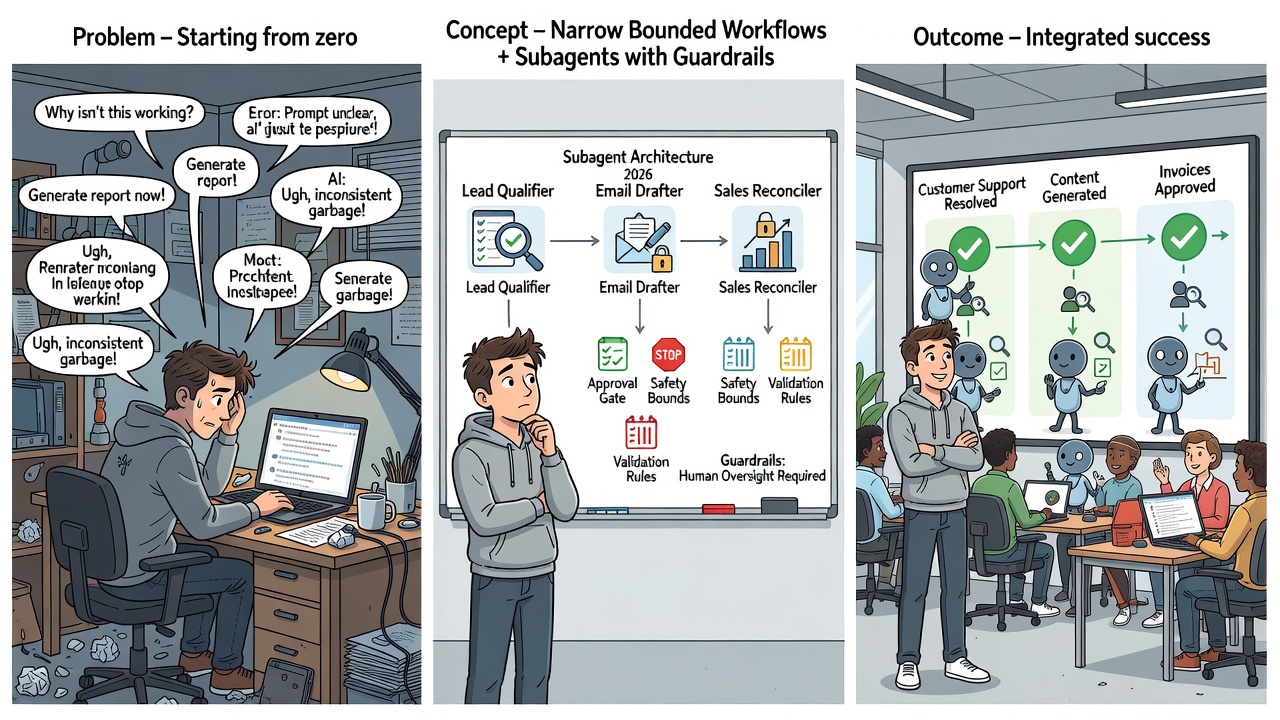
What makes agentic artificial intelligence different from traditional automation? Traditional tools follow rigid rules: if invoice exceeds $10,000, route to manager. Agentic artificial intelligence understands context and makes judgment calls within boundaries you define. It might recognize that a $10,000 invoice from a vendor you’ve used for ten years requires different handling than the same amount from a new supplier—and act accordingly.
artificial intelligence in Compliance: Turning Your Biggest Headache into a Competitive Advantage
Regulatory compliance represents perhaps the highest-value application of artificial intelligence for SMBs. The compliance burden on small businesses has grown exponentially over the past decade, with requirements spanning GDPR, KYC (Know Your Customer), AML (Anti-Money Laundering), industry-specific regulations, and an ever-expanding web of tax obligations.
Large enterprises address this complexity by hiring compliance teams, engaging specialized consultants, and implementing million-dollar governance systems. SMBs have traditionally faced a difficult choice: accept significant compliance risk or divert precious resources from growth activities to regulatory box-checking.
artificial intelligence fundamentally changes this equation in several ways.
Real-Time Monitoring Replaces Periodic Audits
Traditional compliance relies on periodic reviews—quarterly audits, annual assessments, occasional spot-checks. This approach creates windows of vulnerability where issues go undetected until significant damage has occurred.
AI-powered compliance tools monitor continuously. They can flag a potentially problematic transaction within minutes, identify a data handling practice that violates privacy regulations as it happens, or alert you to a tax filing deadline before it’s missed. This shift from reactive to proactive compliance reduces risk while actually requiring less human attention once properly configured.
Jurisdiction-Aware Systems for Global Operations
SMBs increasingly operate across multiple jurisdictions—selling internationally, hiring remote workers in different states or countries, managing suppliers across borders. Each jurisdiction brings its own compliance requirements, creating a complexity multiplier that quickly overwhelms manual tracking systems.
Modern platforms like ZoikoSuite emphasize “jurisdiction-aware governance architecture” that automatically applies the appropriate rules based on where transactions occur, where employees work, and where customers reside [10]. This capability, once available only to multinational corporations with dedicated legal departments, now comes standard in SMB-focused software.
Practical Starting Point: Begin with Your Highest-Risk Area
For most SMBs, the highest-impact starting point is whichever compliance area carries the greatest risk of significant penalties or business disruption. For some, that’s data privacy and GDPR compliance. For others, it’s employment law and HR regulations. Financial services companies might prioritize AML and KYC automation.
Rather than attempting to implement artificial intelligence across all compliance functions simultaneously, identify your single greatest compliance pain point and seek an artificial intelligence solution for that specific challenge. The lessons learned will inform broader adoption.
Transforming Financial Operations Without Losing the Human Touch
artificial intelligence’s impact on financial operations extends far beyond basic bookkeeping automation. The most valuable applications help finance teams make better decisions, not just process transactions faster.
Cash Flow Intelligence
Cash flow remains the primary cause of small business failure, yet traditional accounting software offers limited predictive capability. AI-powered financial tools analyze historical patterns, accounts receivable aging, seasonal trends, and even external factors like industry conditions to provide actionable cash flow forecasts.
For example, a landscaping company might use artificial intelligence to predict that based on weather patterns, customer payment histories, and equipment maintenance schedules, cash will be tight in early March—information that prompts the owner to arrange a line of credit or adjust payment terms in January rather than scrambling in a crisis.
Anomaly Detection and Fraud Prevention
Small businesses lose a disproportionate amount to fraud because they lack the internal controls and oversight common in larger organizations. artificial intelligence excels at pattern recognition that humans simply cannot match at scale.
Modern artificial intelligence tools can flag unusual vendor payments, identify potential embezzlement patterns, detect invoice fraud attempts, and alert owners to transactions that fall outside normal parameters—all without requiring expensive forensic accounting services.
Strategic Financial Analysis
Perhaps most valuable for growth-oriented SMBs, artificial intelligence enables strategic financial analysis that was previously accessible only to companies with dedicated FP&A (Financial Planning and Analysis) teams. These tools can model different growth scenarios, analyze customer profitability, optimize pricing strategies, and identify the financial implications of strategic decisions before they’re made.
HR and Workforce Management: Augmentation Over Elimination
Many business owners express concern that artificial intelligence in HR means eliminating jobs—an understandable worry, especially for leaders who take pride in creating employment opportunities in their communities. The data suggests a more nuanced reality.
According to SHRM’s State of artificial intelligence in HR 2026 Report, artificial intelligence is 3 times more likely to create new roles than eliminate existing ones [1]. Even more significantly, the research indicates organizational impact is 5.7 times more likely to shift job responsibilities rather than cut positions [1]. The same report projects that 46% of organizations expect to use artificial intelligence in HR by 2026 [1].
These statistics suggest SMBs should approach artificial intelligence as a tool for workforce augmentation rather than replacement. Here’s what that looks like in practice.
Recruitment and Hiring
AI-powered recruitment tools help SMBs compete for talent against larger employers with bigger HR departments. These systems can screen resumes more efficiently, identify candidates whose backgrounds suggest strong fit beyond keyword matching, and even help craft job descriptions that attract diverse, qualified applicants.
For a growing business hiring its first sales team or expanding into a new market, artificial intelligence recruitment tools provide capabilities that would otherwise require engaging expensive recruiting firms or dedicating an HR professional full-time to the hiring process.
Compliance and Documentation
Employment law compliance represents one of the most perilous areas for SMBs without dedicated HR expertise. Requirements around hiring practices, workplace safety, benefits administration, and termination procedures vary by jurisdiction and change frequently.
AI-powered HR platforms automatically track regulatory changes, update documentation templates, and flag potential compliance issues before they become problems. This continuous monitoring provides protection that periodic legal reviews simply cannot match.
Employee Development and Retention
Retention often determines whether a small business thrives or struggles, yet SMBs rarely have resources for formal development programs. artificial intelligence can help identify flight risks, recommend development opportunities, and even facilitate performance management conversations through data-driven insights about individual contributors.
Integrated Platforms: Solving the Fragmentation Problem
One of the most practical benefits of AI-powered business tools is the trend toward integrated platforms replacing fragmented systems. Many SMBs manage a patchwork of software subscriptions: one system for accounting, another for payroll, a third for HR, separate tools for tax compliance and regulatory reporting.
This fragmentation creates multiple problems. Data doesn’t flow smoothly between systems, requiring manual reconciliation. Different interfaces increase training burden. Compliance gaps emerge at the boundaries between tools. Total cost often exceeds what a unified platform would require.
Modern AI-powered platforms increasingly cover accounting, payroll, HR, tax, and regulatory compliance in a single system with unified data architecture. When evaluating new tools, SMB owners should prioritize integration capabilities over feature lists for individual functions.
The ideal state is a business operations platform where a payroll change automatically updates tax withholding calculations, triggers appropriate benefits adjustments, and ensures compliance with applicable regulations—all without manual intervention or data transfer between systems.
Your 90-Day artificial intelligence Adoption Roadmap
For SMB owners ready to embrace artificial intelligence for compliance, finance, and operations, here’s a practical implementation approach.
Days 1-30: Assessment and Planning
Identify your top three operational pain points where artificial intelligence could provide immediate value. Common candidates include compliance monitoring, cash flow forecasting, and recruitment automation. For each pain point, research available tools with free trials or no-contract options. Involve key team members in the evaluation process to build buy-in.
Days 31-60: Pilot Implementation
Select one pain point and implement an artificial intelligence solution, starting with the smallest scope that demonstrates value. Establish clear metrics for success before beginning. Document processes and learnings to inform future expansion. Resist the temptation to customize extensively before proving basic value.
Days 61-90: Evaluation and Expansion
Assess results against pre-defined metrics. Gather feedback from users and identify improvements. Plan expansion to additional pain points based on pilot learnings. Consider consolidation opportunities where multiple point solutions could be replaced by an integrated platform.
The Window of Opportunity
The current moment represents a unique window for SMB artificial intelligence adoption. Vendors are actively seeking smaller customers, offering competitive pricing and accessible entry points as they build market share [9]. Meanwhile, large enterprises move cautiously, constrained by legacy systems and internal bureaucracy.
This window won’t remain open indefinitely. As artificial intelligence tools mature and enterprise adoption accelerates, pricing may increase and attention may shift away from the SMB market. Business owners who establish artificial intelligence capabilities now will be better positioned to compete as these tools become table stakes rather than differentiators.
The businesses that thrive in the coming years won’t necessarily be those that cut the most costs through automation. They’ll be the ones that make the best decisions, informed by AI-powered insights across compliance, finance, and operations. For agile SMBs willing to embrace these tools, the advantage is waiting to be claimed.
Conclusion: Your Move
The democratization of AI-powered compliance, finance, and operations tools represents one of the most significant shifts in small business technology in decades. Capabilities that once required enterprise budgets and dedicated teams are now accessible through affordable subscriptions and even free platforms.
The question isn’t whether artificial intelligence will transform business operations—that transformation is already underway. The question is whether your business will be among those leading the change or scrambling to catch up.
Start with one pain point. Explore one tool. Learn one new capability. The journey of a thousand miles begins with a single step, and the competitive advantage goes to those who take that step first.
Sources
- SHRM - The State of AI in HR 2026 Report - https://www.shrm.org/topics-tools/research/state-of-ai-hr-2026/full-report
- OutSolve - Top 4 HR Compliance Trends to Watch in 2026 - https://www.outsolve.com/blog/top-4-hr-compliance-trends-to-watch
- PRNewswire - Papaya Global Launches ONE Agentic Compliance Intelligence Platform - https://www.prnewswire.com/news-releases/papaya-global-launches-one-an-agentic-compliance-intelligence-platform-tailored-to-each-organization-302807523.html
- KPMG - Global AI in Finance Report 2026 - https://assets.kpmg.com/content/dam/kpmgsites/sg/pdf/2026/05/global-ai-in-finance-report.pdf
- Cambridge Centre for Alternative Finance - The 2026 Global AI in Financial Services Report - https://www.jbs.cam.ac.uk/wp-content/uploads/2026/04/ccaf-2026-04-28-global-ai-in-financial-services-report.pdf
- Tellius - 14 Best AI Tools for Finance Teams in 2026 - https://www.tellius.com/resources/blog/14-best-ai-tools-for-finance-teams-in-2026
- RegTech Analyst - What is the Global State of RegTech in 2026? - https://regtechanalyst.com/what-is-the-global-state-of-regtech-in-2026/
- Halkwinds Research - RegTech & Compliance Technology Report 2026 - https://www.halkwinds.com/research/regtech-compliance-technology-report-2026
- RegTech Analyst - Agentic AI Investment Trends - https://regtechanalyst.com/agentic-ai-tops-vendor-investment-plans-by-a-wide-margin-as-fis-take-a-more-measured-approach/
- ZoikoSuite - AI Accounting & Global Compliance Software - https://zoikosuite.com/