· The Rapid Architect Team · AI · 10 min read
Agentic AI in 2026: How Autonomous Workflows Are Transforming Small Business Operations
Discover how agentic AI is transforming small business operations in 2026, moving beyond chatbots to autonomous systems that execute multi-step workflows independently—enabling lean teams to compete like enterprises.
Podcast Discussion
Introduction
The AI honeymoon is officially over. After years of marveling at chatbots that could write emails, summarize documents, and generate social media posts, business owners are waking up to a sobering reality: generative AI alone isn’t delivering the transformational results they were promised. But here’s the exciting news—something far more powerful has emerged to take its place.
Welcome to the era of Agentic AI, where artificial intelligence evolves from a clever assistant that answers questions to an autonomous team member that actually gets work done. For small and medium businesses operating with lean teams and tight budgets, this shift represents nothing less than a fundamental reimagining of what’s possible [1].
If you’ve ever wished you could clone your best employee—the one who handles customer inquiries, updates your CRM, schedules follow-ups, and never drops the ball—you’re about to discover that 2026’s AI landscape has made that wish a reality.
From Answer Engines to Execution Engines: Understanding the Agentic Shift
To appreciate why agentic AI matters for your business, it helps to understand what distinguishes it from the generative AI tools you’ve likely already encountered.
Traditional generative AI operates like a highly knowledgeable consultant: you ask a question, it provides an answer, and then it waits for your next instruction. It’s reactive, conversational, and fundamentally passive. As one industry analysis puts it, “We taught models to speak, and in our surprise, we mistook fluency for intelligence and conversation for work” [3].
Agentic AI represents a decisive pivot from this model. Instead of stopping at suggestions, agent systems plan, call tools, modify artifacts, and execute multi-step processes independently [2]. Think of the difference between a GPS that tells you where to turn versus a self-driving car that actually takes you there.
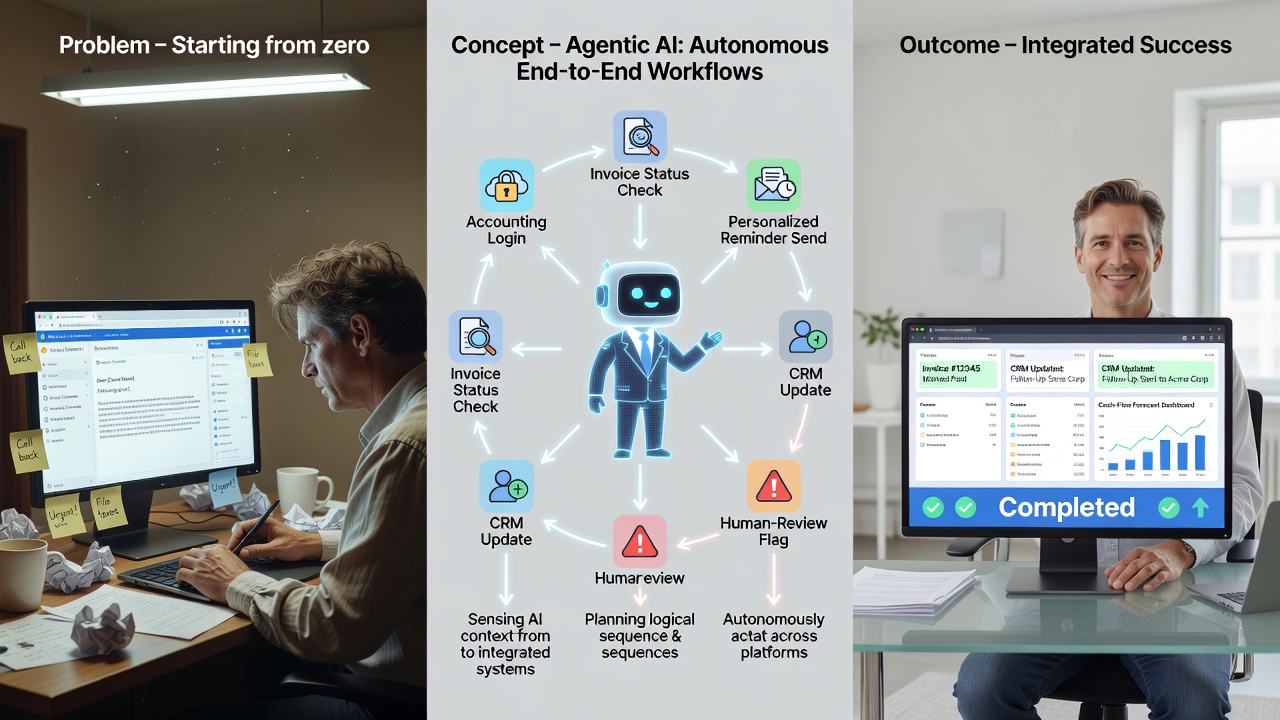
The core distinction lies in autonomy. Where a chatbot might draft an email response for you to review and send, an agentic system can receive a customer inquiry, analyze the request, pull relevant information from your database, craft a personalized response, update your CRM with interaction details, schedule a follow-up task, and send the email—all without human intervention [6].
This is what industry observers mean when they describe AI evolving from “answer engines” to “execution engines” [2]. The implications for resource-constrained businesses are profound.
The Architecture of Autonomous Workflows
Understanding how agentic workflows function helps demystify their capabilities and reveals why they’re particularly valuable for SMB operations.
At their foundation, agentic workflows are AI-driven processes where autonomous agents plan, reason, use tools, and adapt to achieve complex goals across multiple steps [10]. Unlike traditional automation, which follows rigid if-then rules, agentic systems can handle ambiguity, make decisions based on context, and adjust their approach when circumstances change.
The technical architecture typically involves several key components working in concert:
Dynamic Model Orchestration: Rather than relying on a single AI model, modern agentic systems coordinate multiple specialized models, each optimized for different tasks. One model might excel at understanding natural language, another at data analysis, and a third at generating human-like responses [1].
Tool Integration: Agentic AI connects directly to your existing business tools—CRM systems, email platforms, scheduling software, databases, and more. This integration enables agents to take real actions in the real world, not just generate text about what should be done [10].
Memory and Context: Unlike stateless chatbots that forget everything between conversations, agentic systems maintain persistent memory. They remember past interactions, learn from outcomes, and build contextual understanding over time [6].
Goal-Oriented Reasoning: Perhaps most importantly, agentic AI operates with defined objectives. Rather than waiting for step-by-step instructions, these systems can break down high-level goals into subtasks and execute them autonomously [9].
Real-World Applications for Small Business
The theoretical capabilities of agentic AI become compelling when translated into practical business scenarios. Here’s how these systems are transforming operations for lean teams in 2026:
Customer Acquisition and Sales
Consider the typical small business sales process: a potential customer fills out a contact form, someone needs to respond promptly, qualify the lead, update the CRM, and schedule a follow-up. In many SMBs, this process involves multiple handoffs, delayed responses, and frequent dropped balls.
Agentic workflows collapse this entire sequence into an autonomous process. The moment an inquiry arrives, an AI agent can analyze the request, research the prospect using available data, craft a personalized response, update your CRM with relevant details, and schedule appropriate follow-up actions—all within minutes rather than hours or days [4].
One analysis describes this as enabling “smaller, highly-leveraged operations” where a team of five can deliver the responsiveness and follow-through typically requiring fifteen [7].
Marketing Operations
The 2026 marketing landscape has moved decisively past “AI-assisted” strategies into autonomous execution. Agentic systems can now manage entire campaign workflows: analyzing performance data, adjusting targeting parameters, reallocating budgets, generating new creative variations, and optimizing delivery—all while learning from results to improve future performance [8].
For SMBs that previously couldn’t afford dedicated marketing operations staff, this represents a fundamental shift in competitive capability.
Administrative Automation
Perhaps nowhere is the impact more immediately felt than in administrative tasks. Agentic workflows excel at the repetitive, multi-step processes that consume disproportionate time: invoice processing, appointment scheduling, vendor communications, report generation, and data entry.
These aren’t glamorous applications, but they represent the operational friction that prevents small teams from focusing on growth activities. By delegating these workflows to autonomous agents, business owners reclaim hours previously lost to administrative overhead [4].
Customer Service and Support
Beyond simple chatbot interactions, agentic customer service systems can now handle complex support scenarios end-to-end. When a customer reports an issue, an agent can diagnose the problem, access relevant account information, implement solutions within defined parameters, update support tickets, and escalate appropriately when human intervention is genuinely required [6].
The key difference from earlier AI support tools is the ability to take action, not just provide information. An agentic system doesn’t just tell a customer how to reset their password—it can actually reset the password, verify the change, and confirm resolution.
The Harness Pattern: How Modern Agents Are Built
As agentic AI matures, new architectural approaches have emerged that make these systems more reliable and controllable. One particularly relevant development is the “harness” pattern, which provides structure around autonomous agent behavior [5].
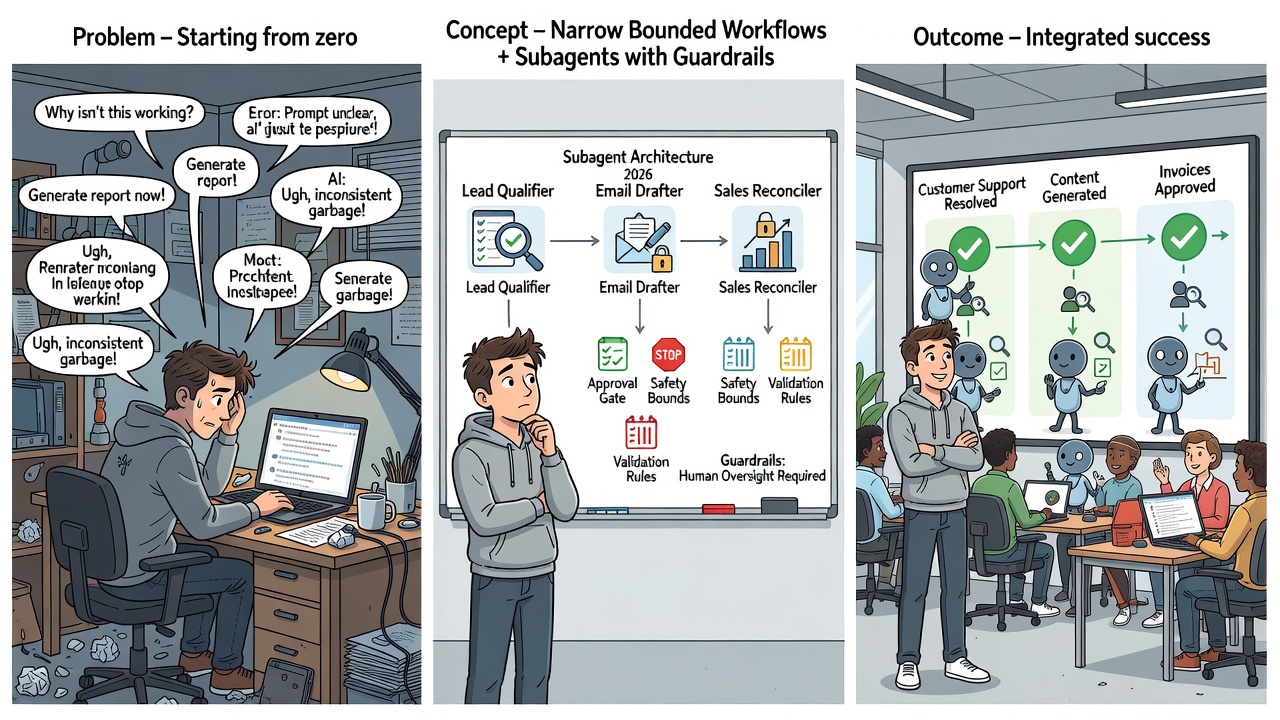
Think of a harness as the guardrails and control mechanisms that ensure an AI agent operates within acceptable boundaries while maintaining its autonomous capabilities. This addresses one of the primary concerns business owners express about autonomous systems: the fear of AI making costly mistakes without oversight.
Modern harnesses provide:
Defined Boundaries: Clear parameters around what actions an agent can take independently versus what requires human approval.
Audit Trails: Comprehensive logging of all agent decisions and actions, enabling review and accountability.
Escalation Protocols: Automatic routing to human decision-makers when situations fall outside normal parameters.
Performance Monitoring: Real-time visibility into agent behavior and outcomes [5].
For SMB owners concerned about maintaining control while gaining efficiency, these governance mechanisms represent crucial safeguards that make autonomous workflows practical for business-critical processes.
Implementing Agentic Workflows: A Practical Roadmap
Transitioning from traditional operations to agentic workflows doesn’t require a wholesale transformation overnight. Here’s a pragmatic approach for SMBs looking to capture these benefits:
Start with High-Volume, Low-Risk Processes
Identify workflows that are repetitive, time-consuming, and relatively low-stakes. Initial lead qualification, appointment scheduling, and routine customer communications make excellent starting points. These processes provide clear value while limiting potential downside as you learn to work with autonomous systems [4].
Map Your Existing Workflows Thoroughly
Before implementing agentic automation, document your current processes in detail. Understanding every step, decision point, and exception case ensures your AI agents can handle real-world complexity rather than idealized scenarios [10].
Ensure Tool Integration Capability
Agentic AI derives its power from connecting to your existing business systems. Evaluate whether your current CRM, email platform, scheduling tools, and other software can integrate with agentic workflow platforms. Many modern business tools now offer API access specifically designed for AI integration [1].
Establish Clear Governance from Day One
Define what decisions agents can make autonomously versus what requires human approval. Set spending limits, communication boundaries, and escalation triggers before deployment. It’s far easier to loosen restrictions over time than to recover from an autonomous system exceeding its intended authority [1].
Plan for Continuous Improvement
Agentic systems improve through feedback and iteration. Establish processes for reviewing agent performance, identifying failure modes, and refining workflows based on real-world results. The organizations seeing the greatest returns treat their AI agents as team members requiring ongoing coaching and development [7].
The Competitive Imperative for SMBs
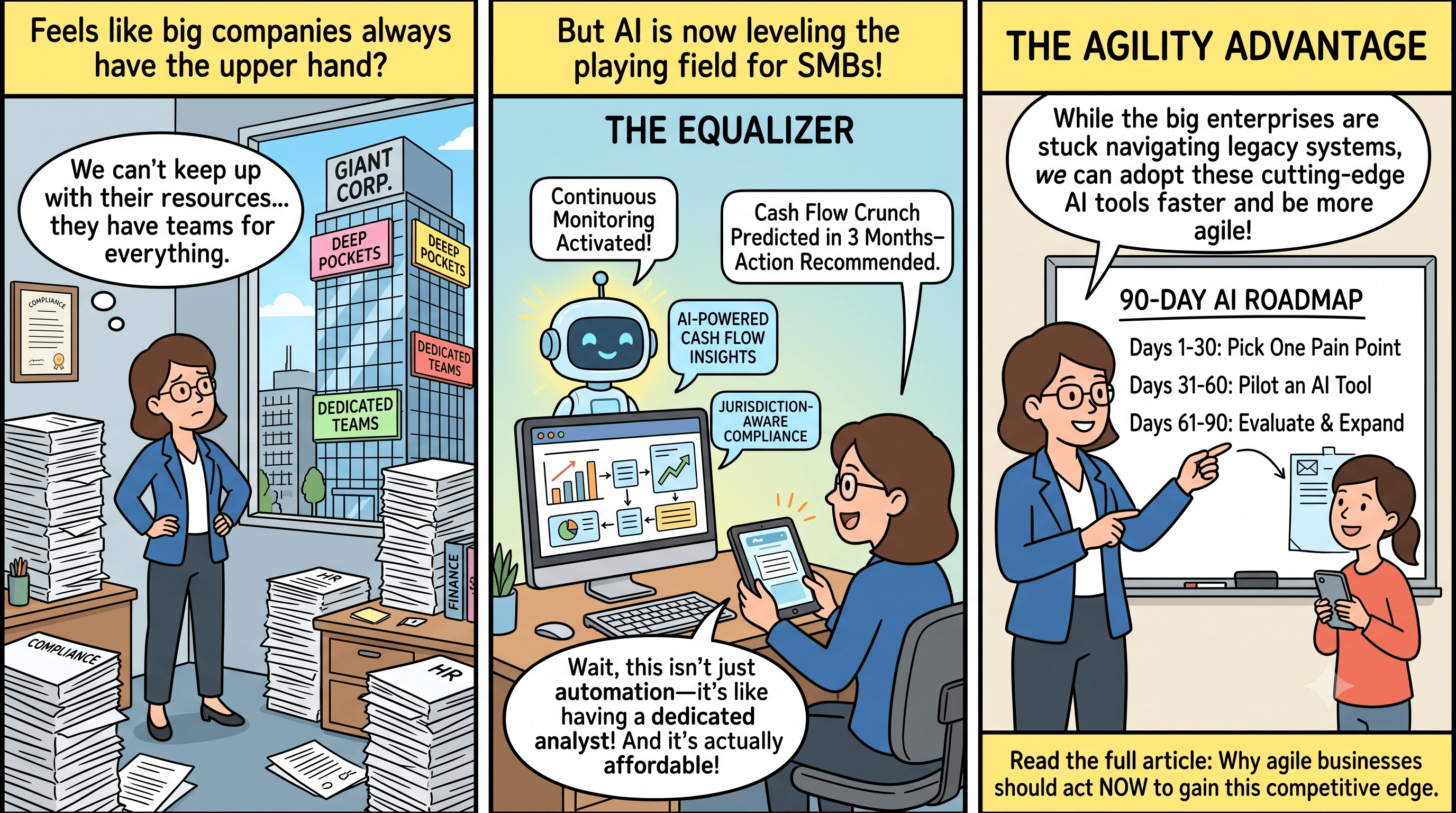
Perhaps the most compelling argument for embracing agentic AI comes from competitive dynamics. As these technologies mature and adoption accelerates, businesses that leverage autonomous workflows gain significant advantages over those that don’t.
Consider response time: when a potential customer contacts multiple vendors, the business that responds within minutes rather than hours dramatically increases its conversion probability. Agentic systems make sub-minute response times achievable for businesses of any size [8].
Consider consistency: human teams inevitably vary in performance based on workload, mood, and attention. Autonomous agents deliver consistent execution regardless of volume, ensuring every customer interaction meets your standards [6].
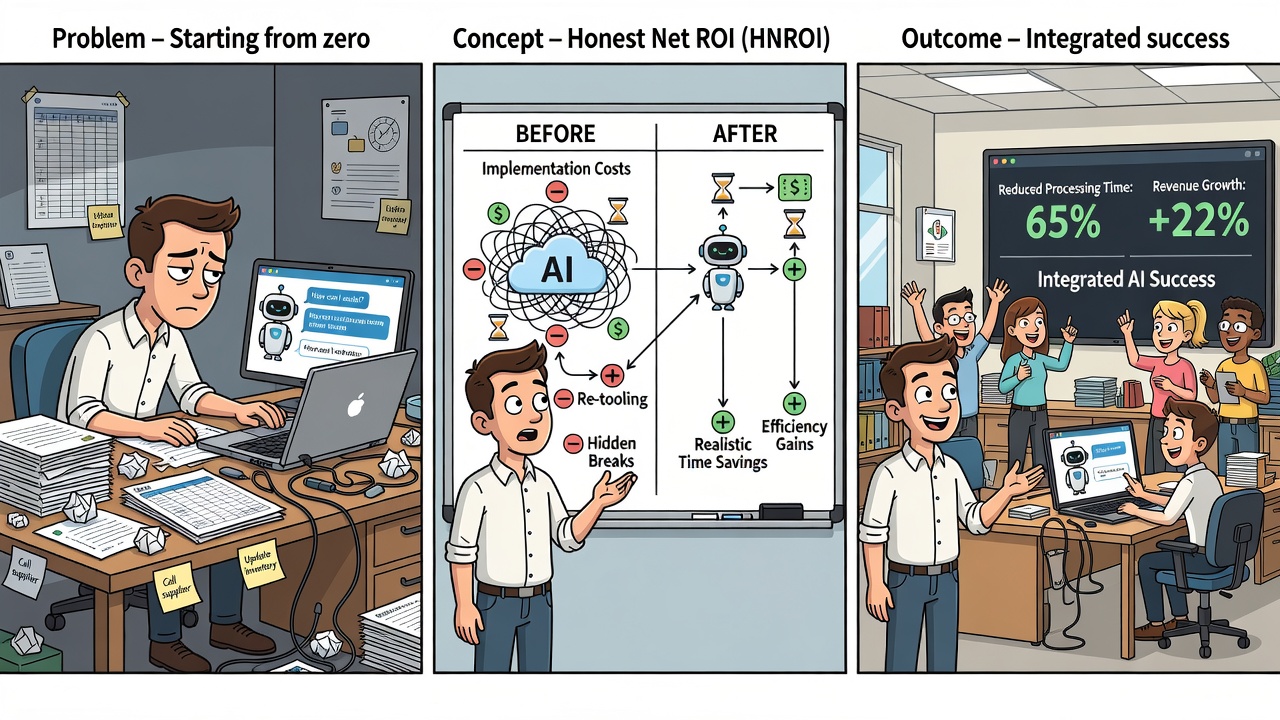
Consider scalability: traditional growth requires proportional increases in headcount. Agentic workflows enable businesses to scale operations without corresponding increases in personnel costs, fundamentally changing the economics of growth [7].
The businesses that master these capabilities early will establish advantages that become increasingly difficult for laggards to overcome.
Addressing Common Concerns
Despite the compelling benefits, many SMB owners harbor legitimate concerns about autonomous AI systems. Addressing these directly:
“Will AI replace my employees?” The evidence suggests agentic AI augments rather than replaces human workers, handling routine tasks while freeing people for higher-value activities requiring creativity, judgment, and relationship-building. Most successful implementations result in role evolution rather than elimination [9].
“What about errors and liability?” Modern agentic systems include robust governance mechanisms, audit trails, and human oversight capabilities. By starting with lower-risk processes and establishing clear boundaries, businesses can capture benefits while managing risks appropriately [5].
“Is this technology mature enough for my business?” The 2026 landscape represents a decisive maturation point. Major platforms from Google, Microsoft, and specialized vendors now offer enterprise-grade agentic capabilities with the reliability and support SMBs require [1].
Conclusion: The New Competitive Baseline
The shift from generative AI to agentic AI represents more than a technological evolution—it’s a fundamental redefinition of what small businesses can achieve with limited resources. The same capabilities that once required substantial teams and significant budgets are now accessible to lean operations willing to embrace autonomous workflows.
The organizations thriving in this new landscape share a common characteristic: they view AI not as a tool to be used occasionally but as a team member to be integrated fully into operations. They’ve moved beyond asking “How can AI help with this task?” to “How should we redesign this process knowing AI can handle execution autonomously?”
For SMB owners, the imperative is clear. The competitive advantages of agentic AI—speed, consistency, scalability, and efficiency—will increasingly separate market leaders from laggards. The businesses that invest in understanding and implementing these capabilities now will establish positions of strength that compound over time.
The AI honeymoon may be over, but the real relationship—one built on practical value rather than novelty—is just beginning. The question isn’t whether agentic AI will transform small business operations; it’s whether your business will be among those leading the transformation or struggling to catch up.
Sources
- [1] https://criztec.com/agentic-ai-in-2026-engineering-autonomous-workflows-1lgg - Criztec Technologies analysis of 2026 enterprise AI landscape and architectural approaches
- [2] https://www.tectack.org/2026/02/the-rise-of-agentic-ai-beyond-chatbot.html - TecTack overview of agentic AI as execution engines
- [3] https://epsilla.com/blogs/2026-03-09-autonomous-agentic-enterprise-shift - Epsilla Blog on the shift from generative to agentic workflows
- [4] https://nexatoolbox.com/the-2026-guide-to-agentic-workflows-moving-beyond-basic-ai-chatbots/ - Nexatoolbox comprehensive guide to agentic workflows
- [5] https://sajalsharma.com/posts/agentic-workflows-to-agent-harnesses - Technical analysis of harness patterns for AI agents
- [6] https://www.digitalocean.com/resources/articles/agentic-ai - DigitalOcean explanation of agentic AI fundamentals
- [7] https://agi.co.uk/agentic-ai-supercycle-2026/ - AGI UK analysis of the agentic AI supercycle
- [8] https://stormy.ai/blog/future-ai-first-gtm-openclaw-autonomous-agents-2026 - Stormy AI on autonomous agents in GTM strategy
- [9] https://office.qz.com/the-agentic-shift-why-the-next-decade-of-ai-is-about-doing-not-just-talking-c99b2eeb43be - Medium article on the agentic shift in AI
- [10] https://www.miniloop.ai/blog/agentic-workflows - Miniloop complete guide to agentic workflows and AI agents