· The Rapid Architect Team · AI · 10 min read
The 2026 SMB Automation Revolution: Practical AI Tools That Won't Break the Bank
Discover how SMBs can leverage practical AI tools like Google Pomelli, voice AI receptionists, and strategic integrations to automate operations without heavy investment in 2026.

Podcast Discussion
Introduction
Running a small or medium-sized business in 2026 means wearing multiple hats—often simultaneously. You’re the CEO, the marketing director, the customer service manager, and sometimes even the receptionist. But what if you could clone your best efforts without cloning your budget?
The good news is that artificial intelligence has finally matured beyond enterprise-only solutions. Today’s AI tools are designed specifically for businesses like yours: practical, affordable, and remarkably easy to implement. From generating professional marketing campaigns in minutes to having an AI receptionist handle your front desk calls, the automation landscape has shifted dramatically in favor of the small business owner.
This guide explores the most impactful, low-barrier AI tools and integrations available right now—solutions that deliver real results without requiring a dedicated IT department or a six-figure technology budget.
The Marketing Revolution: Google Pomelli Changes Everything
For years, small businesses faced an impossible choice: either spend thousands on professional marketing agencies or struggle with DIY content that looked, well, DIY. Google has fundamentally changed this equation with Pomelli, an AI-powered marketing tool developed through a collaboration between Google Labs and Google DeepMind [1].
What Makes Pomelli Different
Pomelli isn’t just another AI content generator. It’s specifically designed to understand your brand and create cohesive, professional marketing campaigns that maintain consistency across all your channels. As Google’s Senior Product Manager Daniel Adonai explains, the tool helps small-to-medium-sized businesses “easily generate scalable, on-brand social media campaigns” [10].
The platform addresses one of the biggest pain points for SMB owners: creating consistent, on-brand content without having a full-time marketing team, designer, copywriter, and creative director on staff [4]. Most business owners simply don’t have access to these resources, yet they’re competing against companies that do.
The Photoshoot Feature: Studio Quality Without the Studio
In February 2026, Google expanded Pomelli’s capabilities with the Photoshoot feature, which transforms simple product photos into professional-grade studio and lifestyle imagery [2]. This is a game-changer for e-commerce businesses and retail shops that previously had to choose between expensive professional photography or amateur-looking product images.
Imagine taking a smartphone photo of your handmade jewelry or boutique clothing line and having AI transform it into imagery that rivals major brand campaigns. That’s exactly what Photoshoot delivers, democratizing access to high-quality visual marketing that was previously reserved for businesses with substantial creative budgets.
Practical Applications for Your Business
Pomelli excels at several key marketing functions [6]:
Campaign Ideation: Instead of staring at a blank screen wondering what to post, Pomelli generates campaign concepts tailored to your brand voice, industry, and target audience. It considers seasonal trends, your business goals, and what’s resonating in your market.
Visual Content Creation: The tool generates on-brand graphics, social media posts, and marketing visuals that maintain consistency across platforms. No more mismatched colors or off-brand messaging.
Multi-Platform Optimization: Pomelli understands that Instagram content differs from LinkedIn posts. It automatically adapts your campaigns for each platform’s unique requirements and audience expectations.
Brand Voice Consistency: Perhaps most importantly, Pomelli learns your brand’s personality and ensures every piece of content sounds authentically like your business [8].
Getting Started with Pomelli
The tool is currently available through Google Labs as an experimental feature [5]. Early adopters report that the learning curve is minimal—most business owners can start generating usable content within their first session. The key is providing Pomelli with enough information about your brand, including your logo, color preferences, tone of voice, and target customer demographics.
One practical tip: start by using Pomelli for a single marketing channel before expanding. This allows you to refine your brand inputs and understand the tool’s capabilities without overwhelming yourself [9].
Voice AI: Your 24/7 Front Desk Solution
While marketing automation grabs headlines, voice AI represents an equally transformative opportunity for SMBs. Consider how many potential customers call your business outside of regular hours, or how many calls go unanswered during your busiest periods. Each missed call is potentially lost revenue.
The Evolution of AI Receptionists
Voice AI has progressed far beyond the frustrating automated phone trees of the past. Modern AI voice assistants can hold natural conversations, understand context, handle complex requests, and seamlessly transfer calls when human intervention is needed.
For service-based businesses—dental offices, law firms, salons, repair shops—voice AI can handle appointment scheduling, answer frequently asked questions, provide business hours and location information, and even process simple transactions. The technology works around the clock, never calls in sick, and maintains consistent quality regardless of call volume.
Implementation Considerations
When evaluating voice AI solutions for your front desk, consider these factors:
Integration Capabilities: The best voice AI systems connect directly with your existing scheduling software, CRM, and communication tools. Look for solutions that work with platforms you already use rather than requiring you to adopt entirely new systems.
Customization Options: Your AI receptionist should sound like an extension of your brand. The ability to customize voice, tone, and responses ensures callers receive an experience consistent with your business personality.
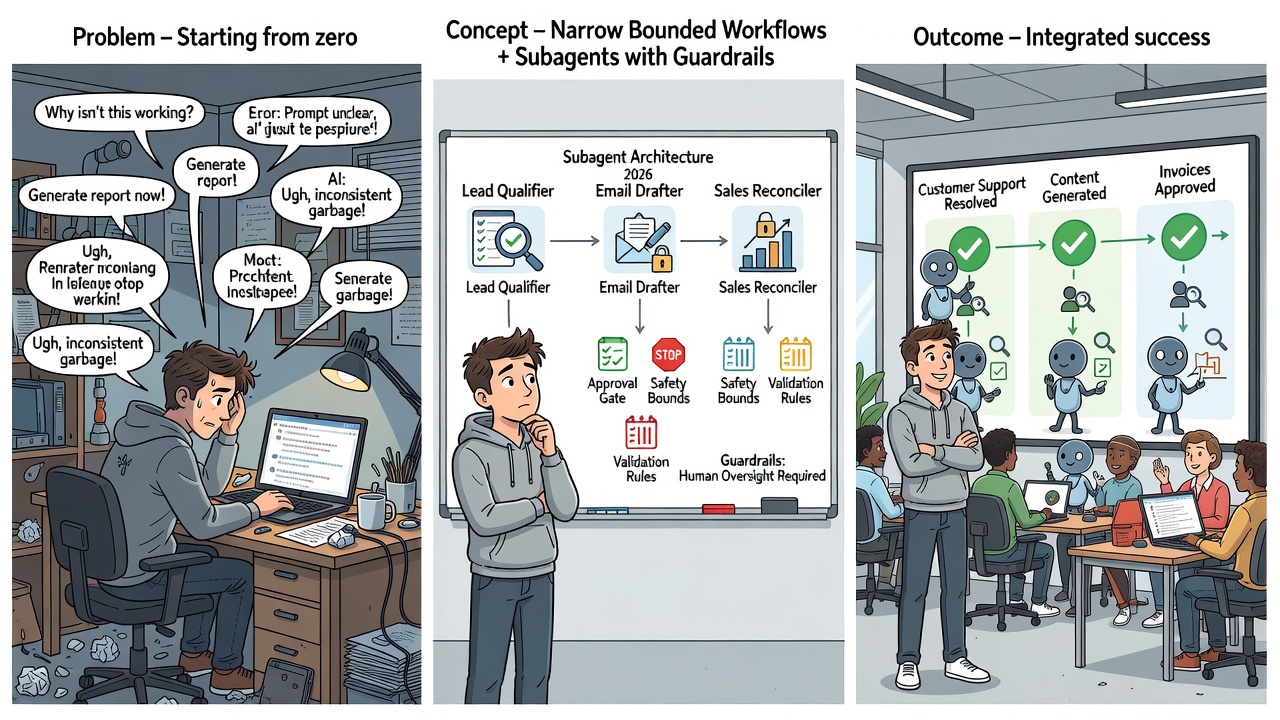
Escalation Protocols: No AI can handle every situation. Ensure your chosen solution has clear protocols for transferring complex calls to human staff, with the ability to prioritize urgent matters appropriately.
Analytics and Insights: Voice AI should provide data about call patterns, common questions, and customer needs. This information helps you improve both your AI responses and your overall business operations.
Cost-Benefit Analysis
For many SMBs, the math is compelling. A full-time receptionist costs anywhere from $30,000 to $50,000 annually in salary alone, plus benefits and overhead. Voice AI solutions typically run from $200 to $500 per month for small business plans, representing potential savings of greater than 80 percent while providing coverage that extends beyond traditional business hours.
The ROI calculation should also factor in captured revenue from calls that would otherwise go unanswered. If your average customer lifetime value is $500 and voice AI helps you capture just five additional customers per month, that’s $2,500 in monthly revenue from a $300 investment.
Strategic Integrations: The Intuit-Anthropic Partnership
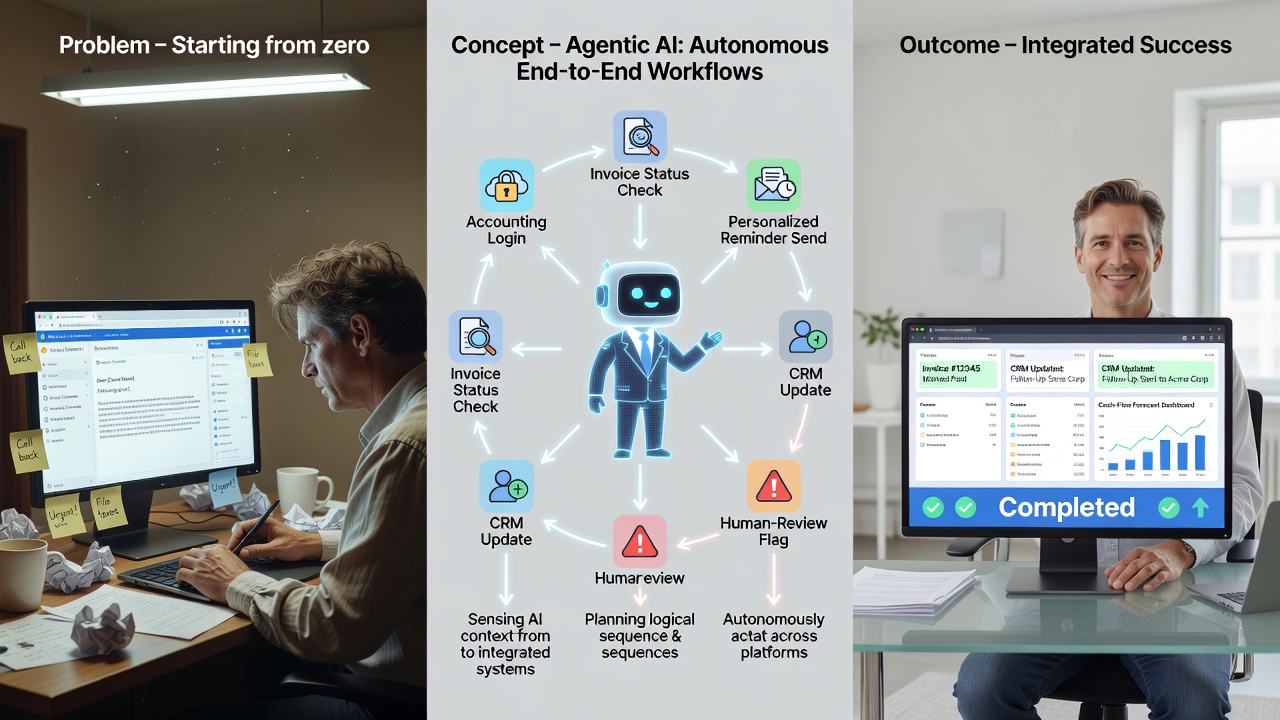
Individual AI tools are powerful, but the real magic happens when they integrate with your existing business systems. The partnership between Intuit and Anthropic exemplifies this trend, bringing sophisticated AI capabilities directly into the financial and operational tools millions of SMBs already use.
What This Integration Means for QuickBooks Users
Intuit’s integration of Anthropic’s AI technology into its ecosystem—including QuickBooks, TurboTax, and Mailchimp—creates opportunities for automation that would have required custom development just a few years ago.
For QuickBooks users, this means AI-assisted bookkeeping that can categorize transactions more accurately, identify potential errors, and provide insights about cash flow patterns. The AI can flag unusual expenses, remind you about upcoming tax obligations, and even suggest areas where you might be overspending compared to industry benchmarks.
Beyond Accounting: Marketing Automation Through Mailchimp
The Intuit-Anthropic partnership extends to Mailchimp, enabling more sophisticated email marketing automation. AI can help craft subject lines that improve open rates, suggest optimal send times based on your audience’s behavior, and personalize content at scale.
For SMBs managing their own email marketing, this integration reduces the expertise required to run effective campaigns. The AI handles the technical optimization while you focus on your message and offer.
The Integration Advantage
The beauty of these strategic partnerships is that they bring AI capabilities to tools you’re already paying for and know how to use. There’s no new software to learn, no additional subscriptions to manage, and no integration headaches to solve. The AI simply makes your existing tools smarter and more capable.
The Broader AI Tool Landscape in 2026
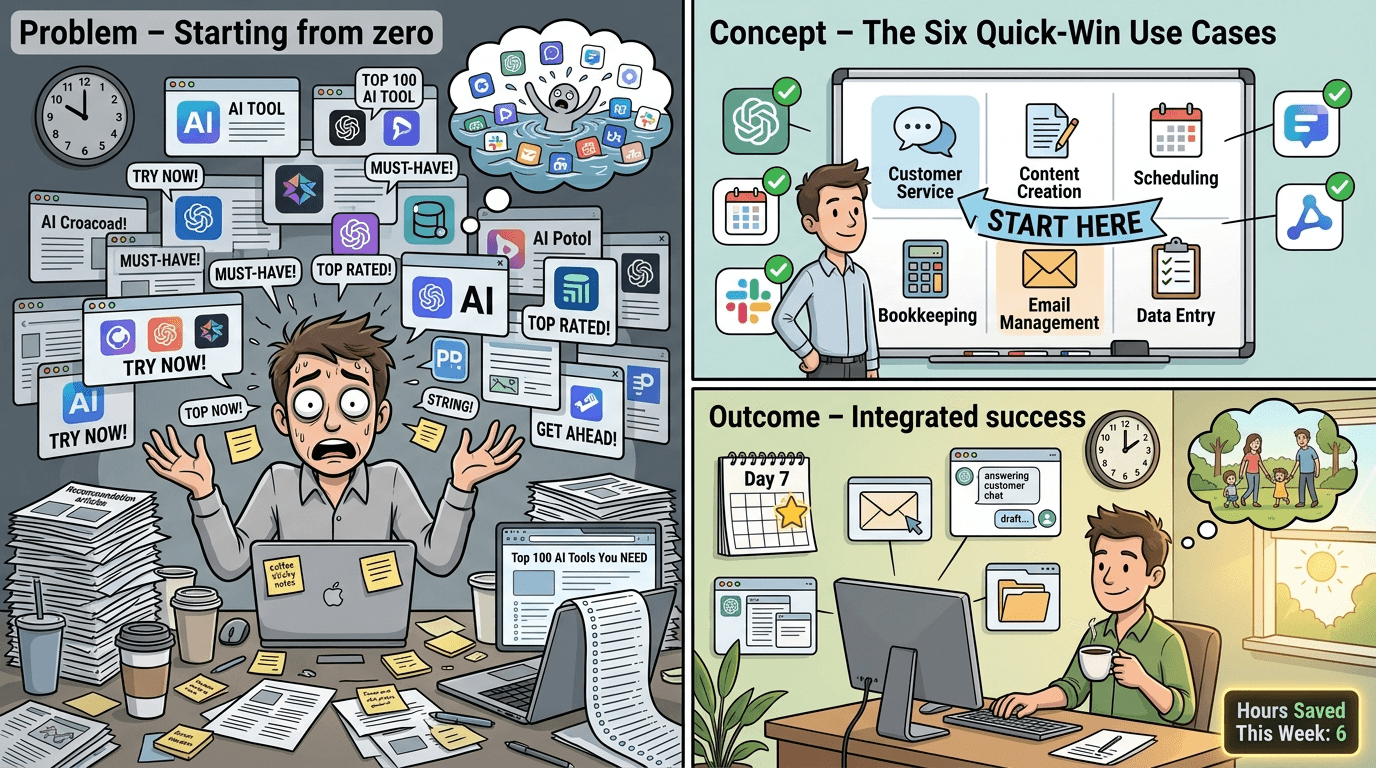
Beyond Pomelli and voice AI, the 2026 landscape offers numerous practical AI tools worth considering [3]. The key is selecting tools that address your specific pain points rather than adopting technology for its own sake.
Content Creation and Brand Management
AI-generated brand content has reached a quality threshold where it’s genuinely useful for SMBs. Tools now exist that can maintain brand consistency across all content types, from social media posts to blog articles to email newsletters. The best of these tools learn from your existing content and feedback, improving their output over time.
Task Automation
Beyond marketing, AI excels at automating repetitive tasks that consume valuable time. Invoice processing, data entry, appointment reminders, inventory management alerts—these are all areas where AI can handle routine work while flagging exceptions for human review.
Video Content
AI video tools have matured significantly, enabling SMBs to create professional video content without expensive equipment or editing expertise. From product demonstrations to customer testimonials to explainer videos, AI can assist with scripting, editing, and even generating certain visual elements.
Building Your AI Automation Strategy
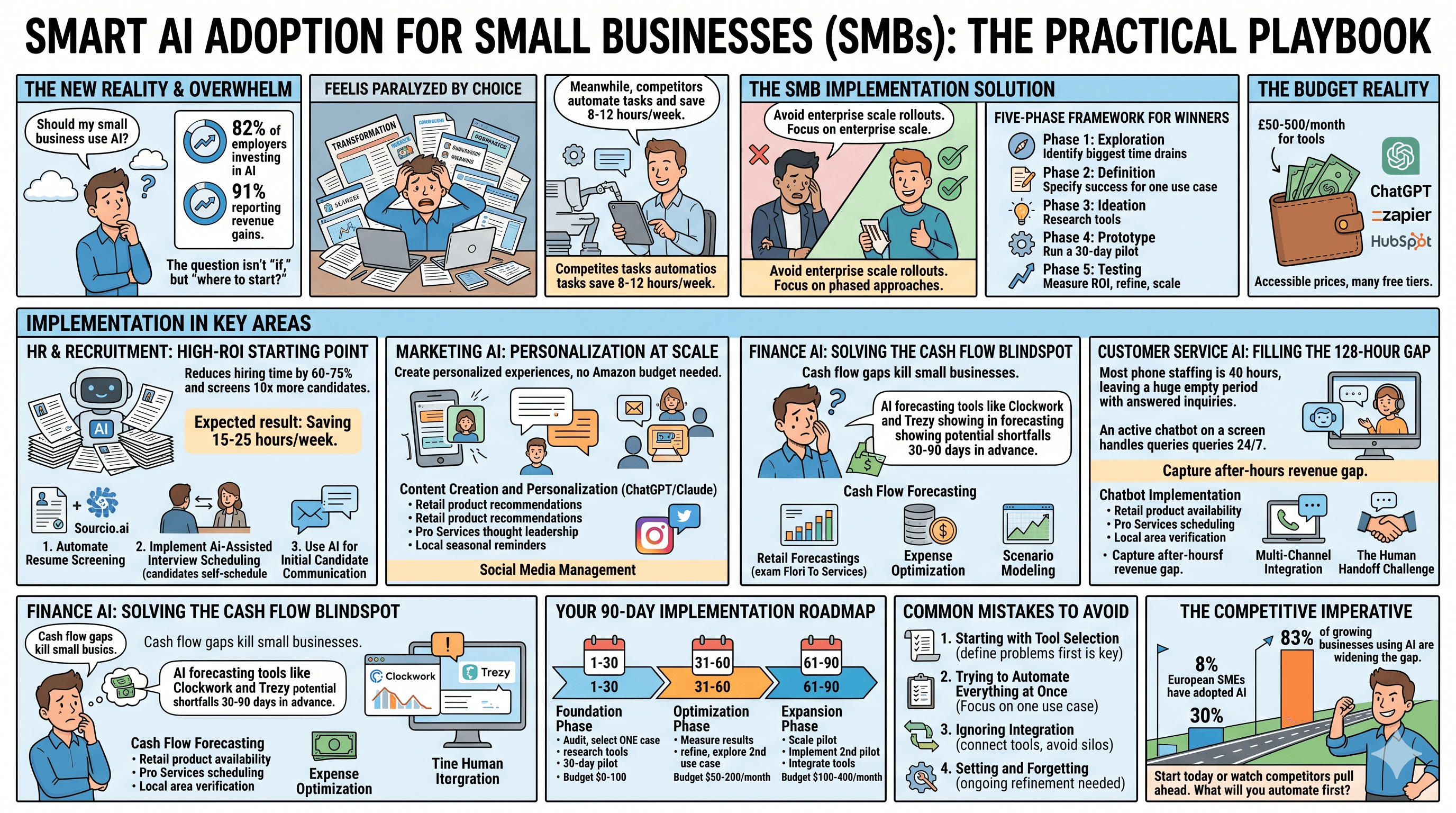
With so many options available, how do you decide where to start? Here’s a practical framework for SMB owners:
Step 1: Identify Your Biggest Time Drains
Track how you and your team spend time for one week. Where are the repetitive tasks? What activities consume hours but don’t require human creativity or judgment? These are your automation candidates.
Step 2: Prioritize by Impact and Ease
Create a simple matrix plotting potential automations by their business impact (high to low) and implementation difficulty (easy to hard). Start with high-impact, easy-to-implement solutions.
Step 3: Start Small and Measure
Rather than overhauling your entire operation, implement one tool or integration at a time. Measure the results—time saved, revenue generated, errors reduced—before moving to the next initiative.
Step 4: Train Your Team
AI tools are only as effective as the people using them. Invest time in training yourself and your staff to maximize the value of each tool. Most vendors offer free training resources and community support.
Step 5: Iterate and Expand
As you become comfortable with initial implementations, look for opportunities to connect tools and create more sophisticated automations. The goal is building an ecosystem where AI handles routine work while humans focus on strategy, relationships, and creative problem-solving.
The Investment Reality
One of the most encouraging aspects of the 2026 AI landscape is the accessibility of pricing. Many tools offer free tiers or trials that allow you to evaluate fit before committing. Paid plans typically range from $20 to $200 per month for SMB-appropriate solutions—a fraction of the cost of hiring additional staff or engaging agencies.
The key is viewing these tools as investments rather than expenses. A marketing tool that saves you 10 hours per month is worth whatever you value that time at. A voice AI system that captures five additional customers monthly pays for itself many times over.
Looking Ahead: What’s Next for SMB Automation
The tools available today represent just the beginning of the SMB automation revolution. As AI technology continues advancing, we can expect even more sophisticated capabilities at lower price points. The businesses that start building their automation capabilities now will be best positioned to adopt new tools as they emerge.
More importantly, early adopters develop the organizational knowledge and processes needed to leverage AI effectively. This institutional capability becomes a competitive advantage that compounds over time.
Conclusion: Your Competitive Advantage Awaits
The democratization of AI tools represents a genuine opportunity for small and medium-sized businesses to compete more effectively against larger competitors. Tools like Google Pomelli, voice AI solutions, and strategic integrations like Intuit-Anthropic bring enterprise-grade capabilities within reach of businesses with limited budgets and no technical staff.
The question is no longer whether SMBs can afford to implement AI automation—it’s whether they can afford not to. Your competitors are exploring these tools right now. The businesses that move decisively to adopt practical AI solutions will capture efficiency gains, improve customer experiences, and free up resources for growth initiatives.
Start with one tool. Solve one problem. Measure the results. Then expand. The path to AI-powered business operations isn’t a massive transformation—it’s a series of practical steps that any business owner can take, starting today.
Sources
- [1] https://neuron.expert/news/google-labs-and-deepmind-launch-pomelli-ai-powered-marketing-tool-for-smbs/15733/en/ - News coverage of Google Pomelli launch
- [2] https://blog.google/innovation-and-ai/models-and-research/google-labs/pomelli-photoshoot/ - Google’s official announcement of Pomelli Photoshoot feature
- [3] https://designforonline.com/5-ai-tools-you-should-know-about-in-2026/ - Overview of top AI tools in 2026
- [4] https://webwallah.in/google-pomelli-ai-marketing-tool/ - Comprehensive guide to Google Pomelli features
- [5] https://www.logicalposition.com/blog/pomelli-in-practice-evaluating-googles-new-ai-tool-for-small-businesses - Practical evaluation of Pomelli for SMBs
- [6] https://www.cyberclick.net/numericalblogen/googles-pomelli-ai-powered-marketing-for-small-businesses - Analysis of Pomelli’s marketing capabilities
- [8] https://www.visla.us/blog/news/google-pomelli-can-googles-ai-marketing-tool-help-you/ - Assessment of Pomelli’s value proposition
- [9] https://www.artezio.com/pressroom/blog/launches-pomelli-marketing/ - Technical overview of Pomelli’s Gemini-powered features
- [10] https://blog.google/innovation-and-ai/models-and-research/google-labs/pomelli/ - Google’s original Pomelli announcement