· The Rapid Architect Team · AI · 10 min read
Close the AI Confidence Gap: From Experimenting to Measurable ROI in 30 Days
Many SMBs adopt AI tools only to face an adoption-without-impact problem where pilots fizzle without revenue gains. This guide shows decision-makers how to bridge the confidence gap, close the revenue divide between high- and low-confidence users, and achieve measurable ROI in just 30 days through focused pilots, simple measurement, governance basics, and small-team training.

Podcast Discussion
Introduction
Small and medium businesses are racing to adopt generative artificial intelligence, yet a troubling pattern has emerged: widespread experimentation that produces little lasting value. Leaders launch pilots with enthusiasm only to watch them stall, leaving teams frustrated and budgets strained. Research shows 95 percent of generative artificial intelligence pilots fail to deliver expected results, while 90 percent of CEOs feel mounting pressure for initiatives to produce measurable payoffs. This creates a stark revenue divide. High-confidence users who embed artificial intelligence deeply into workflows pull ahead, while low-confidence users remain stuck at surface-level demos. The good news is that closing this gap does not require massive investment or technical expertise. By focusing on one pain point, following a structured 30-day cadence, and tracking results with simple frameworks, SMBs can move from AI-curious to AI-capable with real ROI. This post delivers a practical roadmap tailored for teams of 5 to 50 people, complete with examples, measurement tools, and quick governance wins. For instance, a local bakery in Ohio used artificial intelligence to optimize ingredient ordering and cut waste by 22 percent in the first month, turning a simple experiment into a repeatable process that boosted margins without hiring extra staff.
The Adoption-Without-Impact Problem and the Revenue Divide
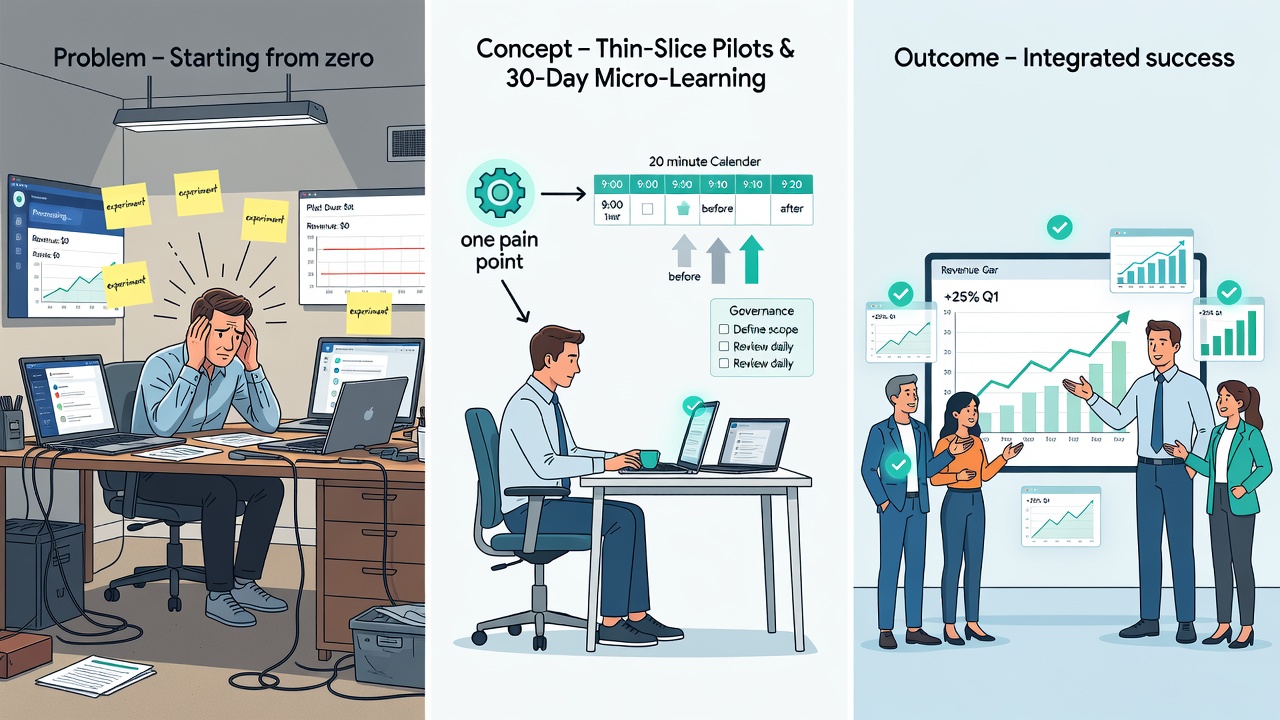
Broad-scope pilots and detached demos rarely translate into revenue or productivity gains. Many SMBs roll out artificial intelligence across multiple departments at once, only to discover that access to tools does not equal adoption. High-confidence users integrate artificial intelligence into daily processes such as invoice review or customer follow-ups, creating compounding efficiency. Low-confidence users experiment sporadically and see minimal impact, widening the revenue gap over time. Thin-slice pilots that target one specific pain point achieve measurable value within 30 days. For example, a 12-person accounting firm chose to automate only accounts payable data entry instead of overhauling the entire finance system. Within four weeks they documented a 35 percent reduction in processing time and redirected saved hours to client advisory work that increased billable revenue. Another case involved a 15-employee plumbing company that applied artificial intelligence solely to scheduling customer calls; the result was a 40 percent drop in no-shows and an extra $18,000 in quarterly revenue from better slot utilization. This focused approach builds confidence quickly and creates proof points that encourage deeper adoption across the team. Without such focus, broad experiments often lead to tool fatigue, where employees revert to old habits within weeks.
A skeptical owner might object that dedicating even one focused pilot diverts attention from core operations. In practice the opposite occurs. The 12-person accounting firm spent just 12 hours total across the month on setup and review yet recovered 140 hours of staff time. Implementation began with a two-hour baseline audit of invoice volume, followed by daily 15-minute prompt refinement sessions using the firm’s existing ChatGPT Business account at $20 per user. After week two the team added a simple approval checklist that caught the remaining 8 percent of edge-case entries the model initially missed. Net result: zero overtime in month one and two new advisory packages sold to existing clients, each priced at $1,800. The plumbing company followed an identical pattern, first exporting three months of call logs into a spreadsheet, then training the artificial intelligence on historical no-show reasons. Within 10 days the scheduler reported the 40 percent reduction and used the freed slots to upsell maintenance contracts, adding the documented $18,000. These numbers directly counter the “we don’t have time” objection by proving the pilot itself generates the time it consumes.
Building artificial intelligence Literacy Basics by Starting with One Pain Point
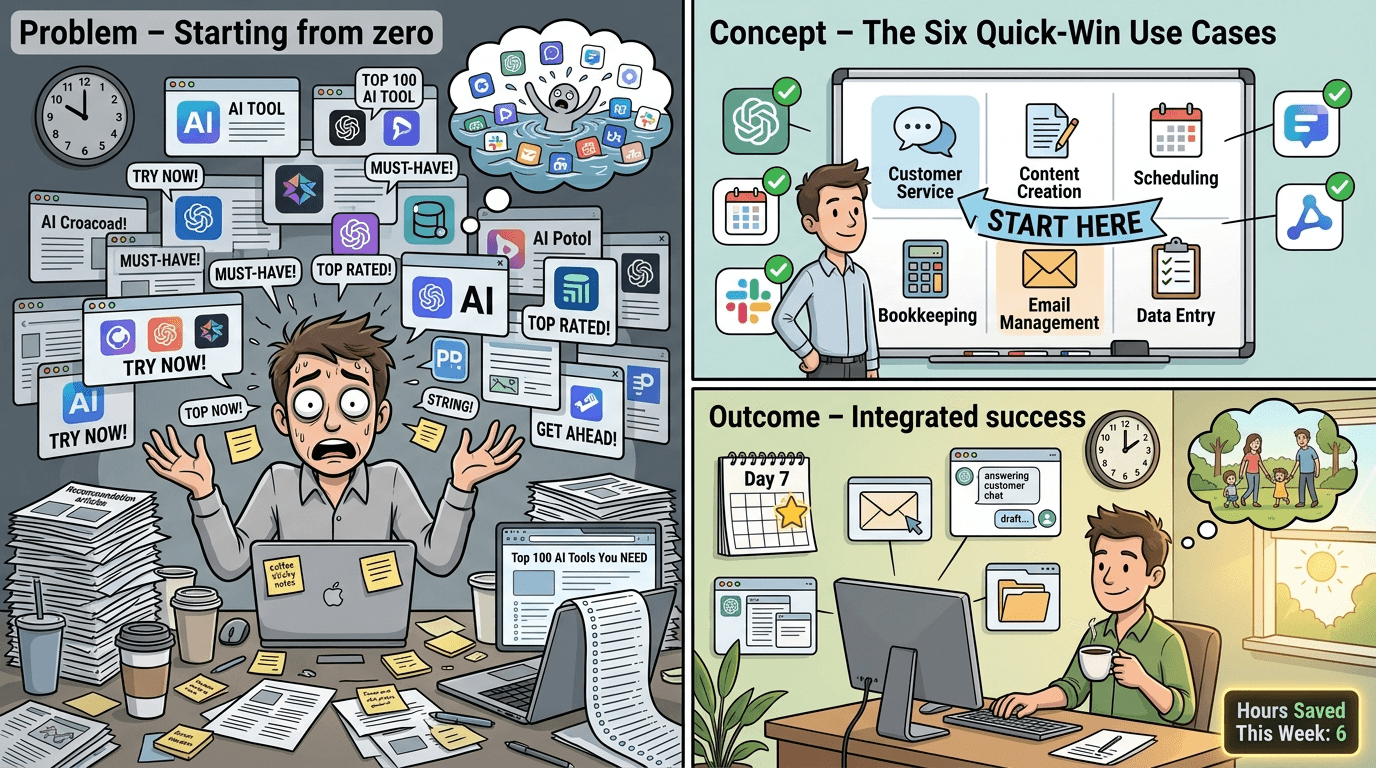
Non-technical teams reach artificial intelligence capability fastest when they begin with a single workflow pain point and follow structured micro-learning. A 20-minute-per-day, 30-day cadence moves professionals from curious to confident without overwhelming small-team bandwidth. Start by identifying repetitive tasks that consume hours each week. A marketing agency might select social media post drafting, while a retail store might pick inventory report generation. Once the pain point is chosen, team members spend 20 minutes daily learning prompt techniques specific to that task. Week one focuses on basic prompt writing and tool familiarization. Week two introduces daily use with real work samples. By the end of the month, the team has built lasting habits rather than fleeting knowledge from a single workshop. Practical example: A five-person e-commerce team picked customer email follow-ups as their single pain point. Each morning they spent 20 minutes refining AI-generated reply templates against actual customer inquiries. After 30 days they reduced average response time from 47 minutes to 12 minutes while improving customer satisfaction scores by 18 percent. A similar story comes from a seven-person law office that targeted contract summarization; they achieved 50 percent faster client intake reviews and freed up two billable hours per attorney daily. These literacy basics emphasize hands-on repetition over theory, ensuring even non-technical staff gain immediate value.
Implementation for the e-commerce team started with a shared Google Sheet logging every incoming inquiry category and current response time. Each day one person rotated the duty of feeding five real emails into the model and editing outputs for tone. After week one the average edit time fell from 9 minutes to 4 minutes, proving the learning curve flattens quickly. The law office used the same rotation model but added a second metric: accuracy of extracted clauses. By day 18 the model correctly flagged 94 percent of termination clauses without human correction, saving the documented two billable hours. Owners worried about quality loss were shown side-by-side before-and-after samples at the 15-day mark; the improved consistency actually reduced client revision requests by 12 percent. Both teams kept total tool cost under $25 per month and required no new hires or consultants.
Measurement Frameworks for Quick Proof
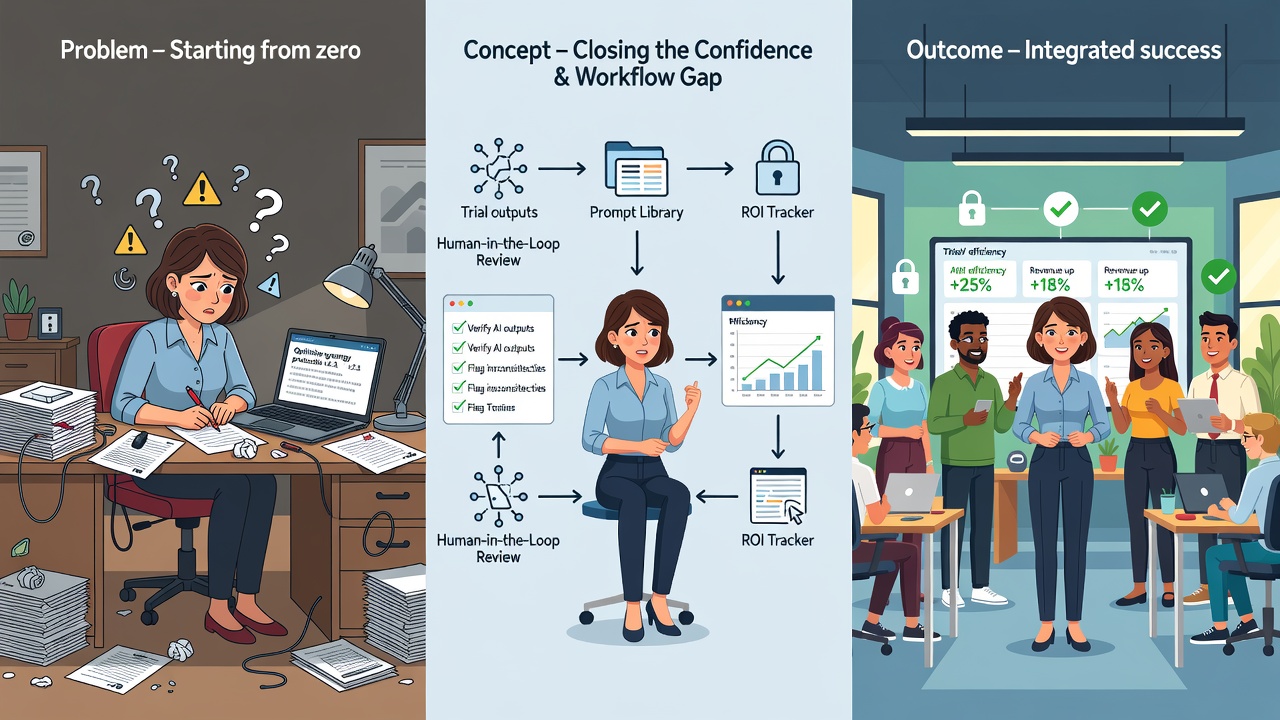
Successful SMBs baseline current workflows before pilots and track KPI deltas on a simple one-page scorecard. Finance-grade metrics convert experiments into board-ready ROI stories, replacing hype with evidence. Use the See-Measure-Decide-Act loop. First, record current time spent, error rates, and revenue impact for the chosen pain point. Next, apply artificial intelligence and measure the same metrics daily. Then decide what adjustments improve results. Finally, act by locking in the new process and documenting the delta. A one-page 90-Day artificial intelligence Pilot Scorecard tracks time saved, error reduction, and revenue impact. One landscaping company used this approach on bid proposal writing. Baseline data showed two hours per proposal at a 22 percent error rate. After artificial intelligence assistance, time dropped to 45 minutes with errors under 5 percent. The scorecard converted those numbers into an estimated $48,000 in annual labor savings plus faster bid turnaround that won three additional contracts worth $120,000. A boutique fitness studio applied the same framework to membership renewal emails, tracking a 30 percent uplift in retention rates that translated to $25,000 extra annual revenue. These frameworks make ROI tangible and help justify further tool investments.
The landscaping company’s owner initially questioned whether the scorecard would survive an accountant’s review. They therefore logged every minute in Toggl, exported raw data into the scorecard template, and attached three months of historical bid logs as evidence. The resulting $48,000 figure was calculated by multiplying 1.25 hours saved per bid by 48 bids per year at a fully loaded $75 hourly rate, then adding the $120,000 pipeline value. The fitness studio tracked retention via its existing Mindbody software, comparing 90-day cohorts before and after the artificial intelligence emails. Both cases produced one-page PDFs that were later used in bank loan applications and investor updates, directly addressing concerns that “artificial intelligence results won’t hold up under scrutiny.”
Governance and Security Quick Wins
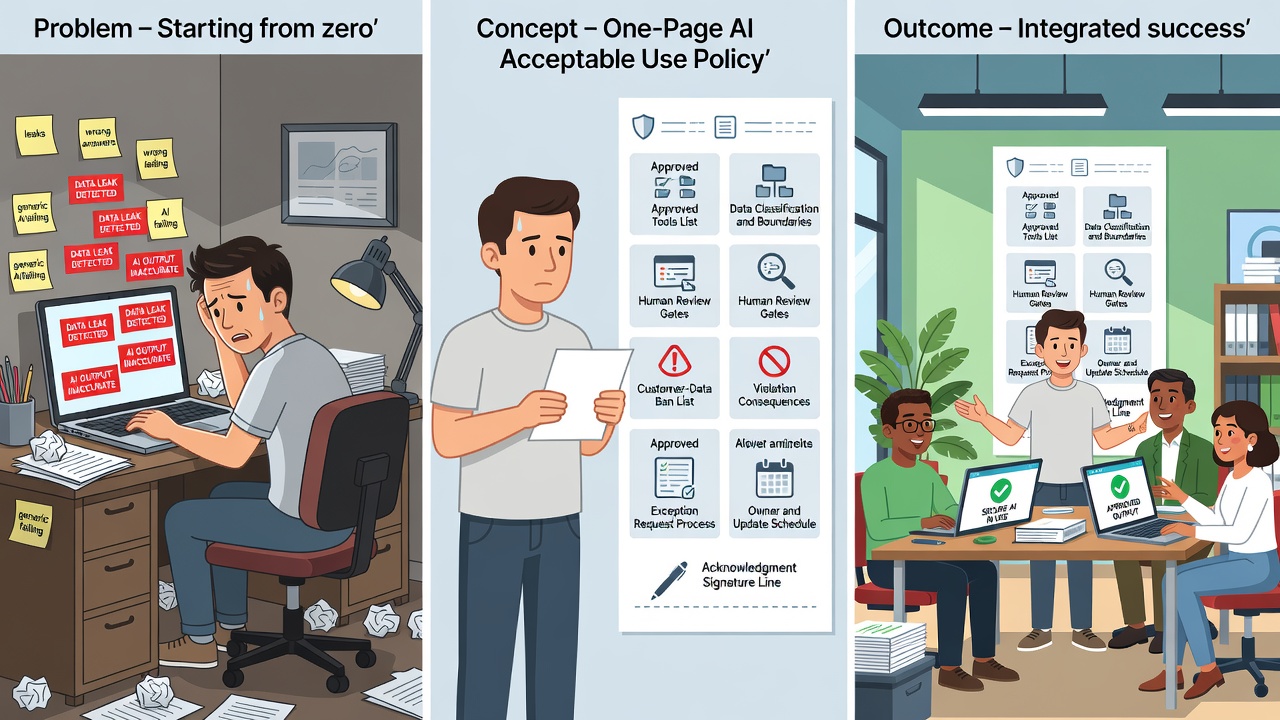
A minimum viable artificial intelligence risk framework covering inventory, ownership, and basic controls can be implemented in 30 days using established NIST guidelines. This protects small teams without adding bureaucratic overhead. Begin with a simple data inventory: list every artificial intelligence tool in use and the types of information being entered. Assign clear ownership so one person monitors usage and updates. Add basic controls such as requiring human review before AI-generated content reaches customers and restricting sensitive customer data from free-tier tools. A dental practice with 18 employees completed this checklist in three weeks. They identified that staff were pasting patient notes into an unsecured chatbot. After switching to an approved enterprise version and adding a quick human-oversight step, they eliminated the risk while maintaining productivity gains. The lightweight NIST-based approach gave them investor-ready documentation without hiring extra compliance staff. Similarly, a 10-person real estate firm restricted client financial details from consumer artificial intelligence tools, avoiding potential breaches and building trust with partners.
The dental practice’s owner worried about HIPAA exposure. They therefore spent one afternoon mapping every data flow, created a one-page acceptable-use policy, and moved to an enterprise plan at $30 per user. The real estate firm added a simple red-flag checklist printed on every desk: if an email contained SSN or bank routing numbers, the artificial intelligence step was skipped. Both implementations were completed in under 10 total staff hours and produced signed policy documents that satisfied their respective insurers and lenders.
Training Approaches Tailored for Small Teams
Phased 30-day plans combined with keep-forever micro-learning systems build lasting capability in resource-constrained environments. The four-week cadence works as follows: Week 1 covers trust and basics, teaching prompt fundamentals and addressing common fears about artificial intelligence accuracy. Week 2 emphasizes daily use with hands-on practice tied to the chosen pain point. Week 3 focuses on role-specific application so each team member sees direct personal benefit. Week 4 introduces governance so everyone understands responsible use. Keep-forever micro-learning means recording short video snippets or written prompts that remain accessible after the 30 days end. This prevents knowledge loss when staff turnover occurs. A property management firm of 22 people used this method and saw 80 percent of employees still applying the techniques six months later, compared with only 25 percent retention after previous full-day workshops. A small manufacturing outfit of eight employees adapted the plan for shift workers by using mobile-friendly snippets, resulting in sustained 15 percent productivity lifts across the team.
The property management firm created five 90-second Loom videos covering prompt templates for lease renewals, maintenance requests, and tenant screening. These videos were stored in a shared Drive folder and viewed 312 times in the following six months. The manufacturing company recorded the same content as voice memos on employee phones, allowing night-shift workers to listen during downtime. Both teams reported zero additional training budget after the initial 30 days and documented the sustained productivity gains through the same scorecard process used in the measurement section.
Your 30-Day Action Plan
Launch your pilot this week by selecting one repetitive task and baselining its metrics. Adopt the See-Measure-Decide-Act loop and schedule 20 minutes of daily micro-learning for each participant. Implement the lightweight risk checklist covering data inventory, access controls, and human oversight. At day 30, complete your one-page scorecard and share results with the team and any lenders or investors. Budget no more than a few hundred dollars for approved tools and training resources. The approach fits teams of 5 to 50 people and directly addresses both the confidence gap and the revenue divide by creating early wins that encourage deeper integration. Track progress weekly to adjust as needed, ensuring momentum stays high.
Conclusion
The gap between high- and low-confidence artificial intelligence users is widening, but it is not inevitable. By replacing broad, unfocused pilots with thin-slice experiments, simple measurement, and small-team training, SMB decision-makers can deliver measurable ROI in 30 days. The result is not just time savings but a sustainable competitive advantage that turns artificial intelligence from an expensive experiment into a reliable revenue driver. Start today with one pain point, track the numbers, and watch your team’s confidence and results grow together. Additional examples from retail, hospitality, and professional services demonstrate that this method scales across industries when kept focused and measured rigorously.
Sources
- https://virtco.com/designing-thinslice-ai-pilots/
- https://actionstrategies.ca/ai-implementation-roadmap-roi/
- https://learn.g2.com/enterprise-ai-adoption-framework
- https://www.ibm.com/think/insights/ai-roi
- https://olakai.ai/blog/enterprise-ai-roi-playbook/
- https://futurefactors.ai/ai-curious-to-confident-30-day-framework/
- https://sentrytechsolutions.com/blog/30-days-to-copilot-confidence-building-your-teams-ai-training-plan
- https://highpeaksw.com/the-90-day-ai-pilot-scorecard-from-kpi-delta-to-board-ready-roi/
- https://www.metacto.com/blogs/ai-roi-metrics-framework
- https://www.fletterconsulting.com/ai-risk-management-framework-30-days/