· The Rapid Architect Team · AI · 9 min read
Why 77% of SMBs Use AI but Most Still Feel Stuck — Closing the Confidence & Workflow Gap
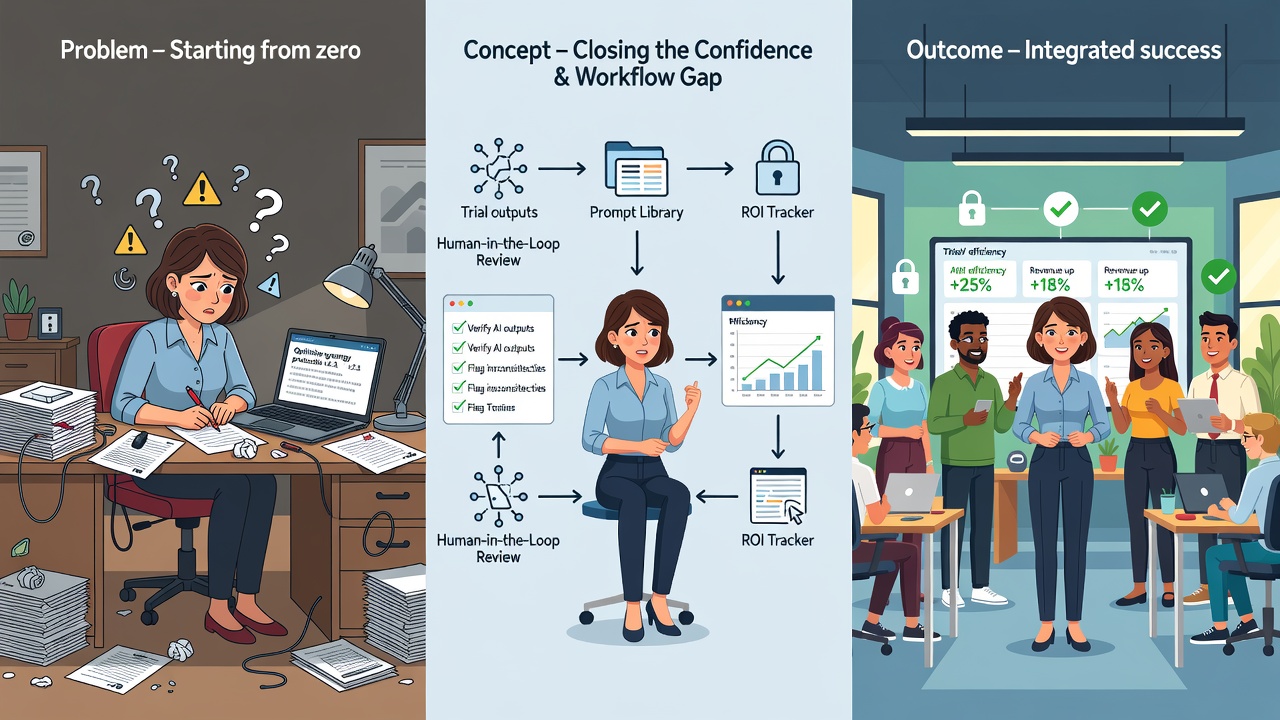
Many small and medium businesses have jumped on the AI bandwagon, yet most remain trapped in trial-and-error mode. This post breaks down the 2026 adoption data, reveals why trust and workflow issues hold teams back, and delivers step-by-step tactics to move from shallow experiments to measurable productivity and revenue gains.
Podcast Discussion
Introduction
Picture this: your team saves four hours a week thanks to artificial intelligence tools that draft emails, review invoices, and schedule posts. Yet instead of celebrating the win, you spend a chunk of that time double-checking outputs for mistakes, second-guessing security, or wondering if anyone on staff actually knows how to scale these wins across the business. You are not alone. Recent data shows 77 percent of small and medium businesses now use artificial intelligence in some form, yet only 14 percent have woven it into core operations. The result is a widespread feeling of being stuck despite clear early promise.
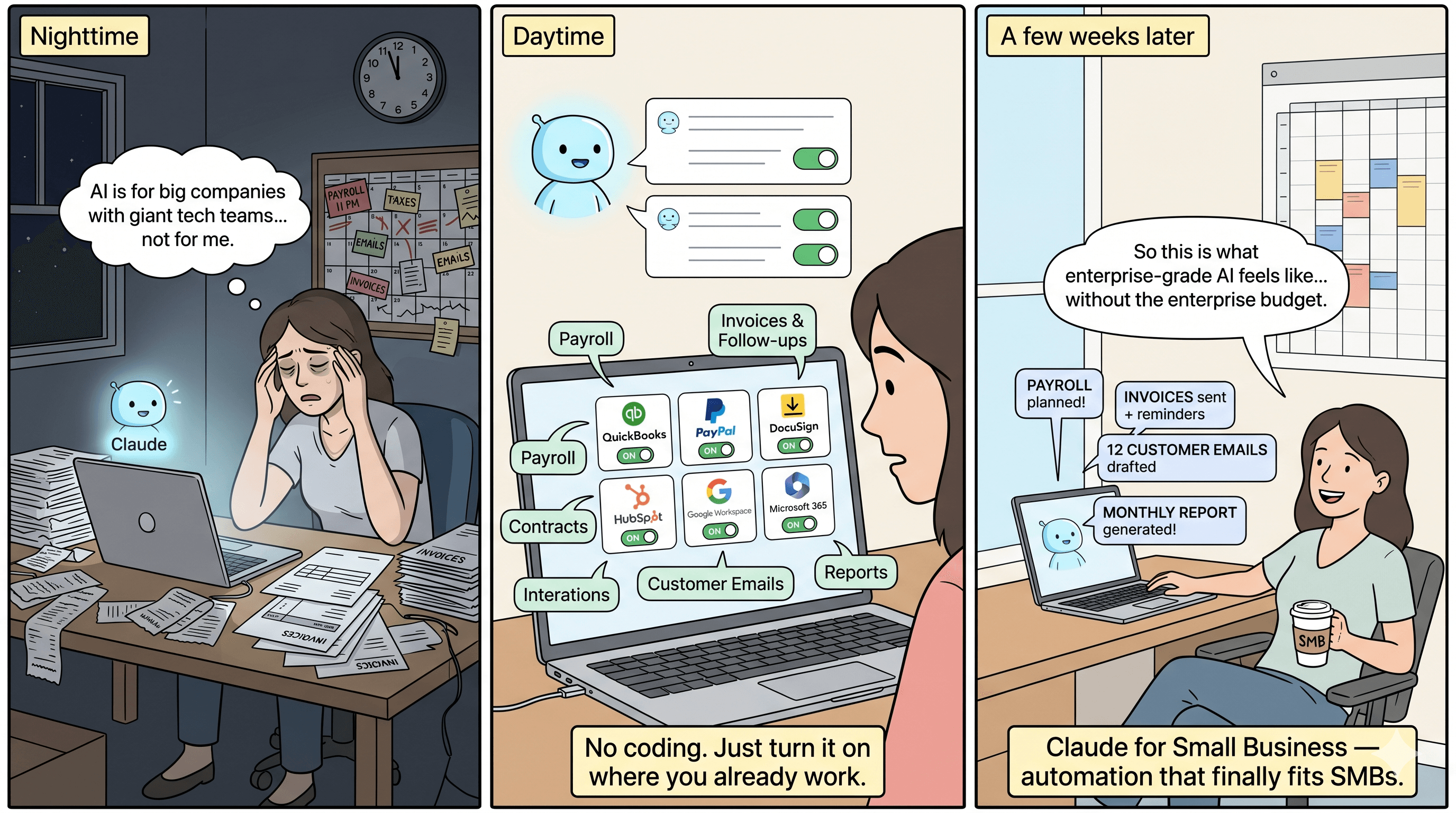
This gap between broad adoption and deep integration stems from three stubborn barriers: distrust in accuracy, security concerns, and a shortage of hands-on expertise. The good news is that closing the gap does not require hiring a data science team or buying expensive platforms. It starts with practical literacy moves such as prompt libraries, clear human review rules, and simple weekly metrics that track hours saved and revenue influenced. Over the next sections we unpack the numbers, explore the real barriers, and lay out a repeatable playbook any SMB can follow.
The Adoption Paradox: Widespread Use, Shallow Impact
High headline adoption numbers mask limited operational depth. Goldman Sachs reports that 93 percent of SMBs see positive business impact from artificial intelligence, yet only 14 percent have fully integrated the technology into day-to-day processes. Most organizations sit at Level 1 of the four-stage artificial intelligence adoption model, using tools for isolated tasks rather than enterprise-wide workflows.
Paid artificial intelligence usage continues to climb across the United States, Canada, the United Kingdom, and Australia, but the pattern remains narrow. Teams experiment with chatbots for customer service or generators for social media captions, then stop. Fewer than one in five small businesses effectively spreads artificial intelligence across operations. This shallow penetration explains the stuck feeling: early wins exist, but they never compound into lasting efficiency or new revenue streams.
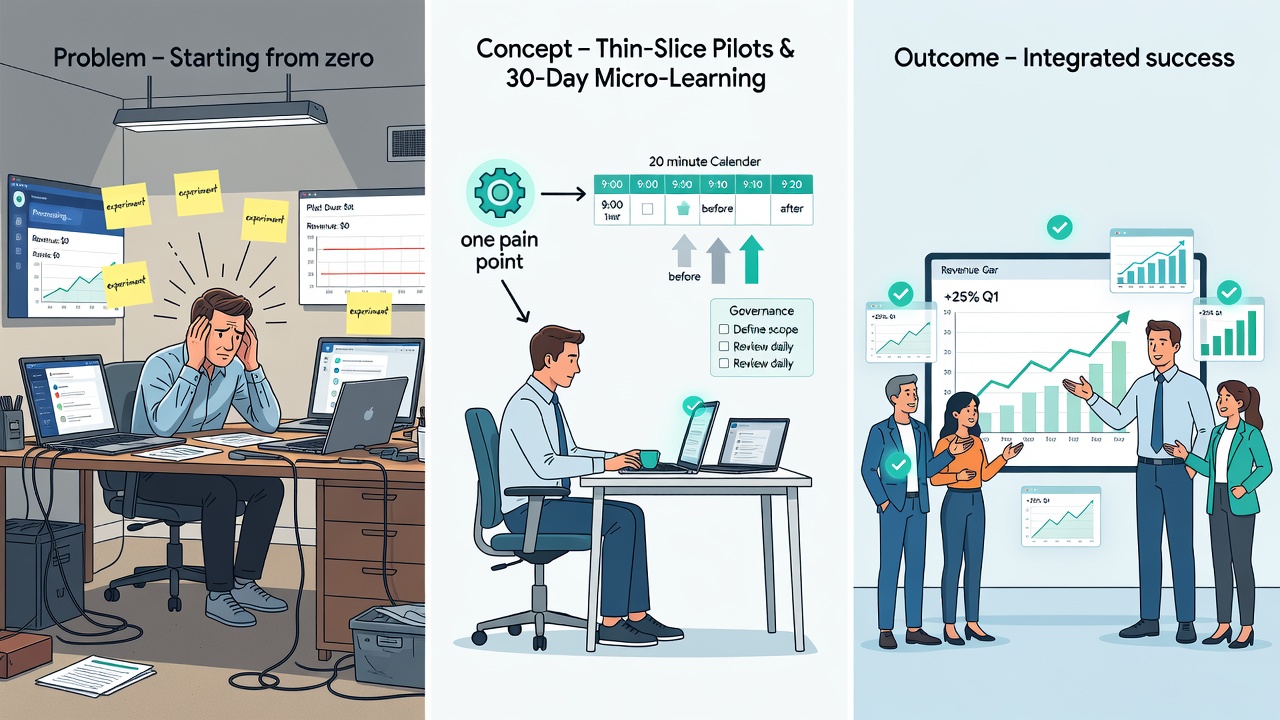
The four-stage model makes the problem visible. Stage 1 is basic experimentation. Stage 2 introduces repeatable templates. Stage 3 adds governance and measurement. Stage 4 delivers full workflow redesign. Crossing from Stage 1 to Stage 2 requires more than downloading another app; it demands deliberate literacy and process changes. For example, a 12-employee marketing agency in Austin reached Stage 2 by documenting every successful ChatGPT prompt for blog outlines in a shared Google Doc. Within six weeks, output volume rose 40 percent while maintaining brand voice through consistent templates. A skeptical owner might object that such documentation takes too much upfront time, yet the agency spent only three hours initially compiling the first ten prompts and recouped that investment in the first week through faster drafting alone.
Why SMBs Feel Stuck: Accuracy Distrust, Security Worries, and Expertise Gaps
Trust deficits persist even as usage rises. An Intuit and Bluevine study found that 78 percent of SMBs do not trust artificial intelligence for core tasks despite three out of four already using it. Accuracy concerns are the largest culprit. Businesses report spending 26 percent of their AI-generated time savings simply reworking outputs to fix errors or tone issues.
Security worries compound the problem. SMB owners cite cybersecurity risks as a top blocker, fearing that sensitive customer or financial data could leak through public artificial intelligence platforms. Without clear internal policies, teams default to caution and keep artificial intelligence at arm’s length. A 25-person e-commerce retailer in Ohio solved part of this by routing all artificial intelligence queries through a private instance of Claude via AWS, cutting perceived risk and allowing the finance team to use it for cash-flow forecasting. The setup cost $180 monthly yet saved 11 hours per week previously spent on manual projections; the owner addressed the common objection of added expense by noting that the time savings translated to $2,200 in recovered billable capacity each month.
Expertise shortages close the loop. Many owners and employees lack role-specific training, so they never move past basic prompts. Goldman Sachs data shows 73 percent of SMBs believe more targeted training and resources would accelerate progress. The result is a readiness-reality gap: tools sit on the shelf while teams continue manual workarounds. These barriers do not disappear on their own. They shrink only when businesses replace ad-hoc use with structured literacy and governance. A 15-employee construction firm in Phoenix initially resisted training because the owner feared it would distract from billable work; after a two-hour role-specific session focused solely on bid-summarization prompts, the team reduced proposal errors by 42 percent and reclaimed nine hours weekly.
Building artificial intelligence Literacy: Start with a Prompt Library
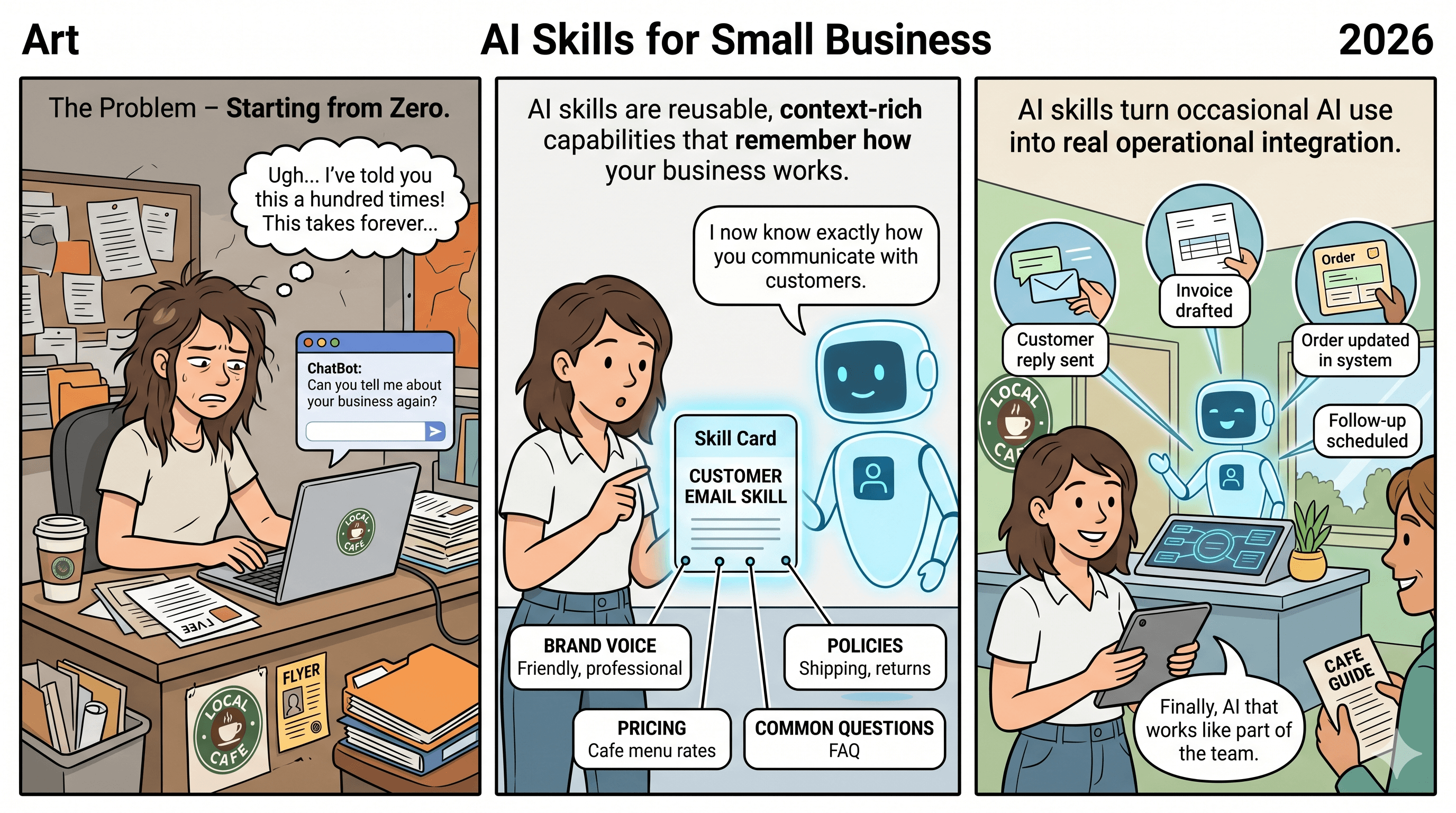
The fastest way to reduce variability and build quick wins is a shared prompt library. Create a living document or internal wiki that stores tested prompts for common tasks such as email drafting, invoice review, social media posts, and meeting summaries.
Begin with five to seven high-frequency tasks. For each task write a base prompt, note the best model to use, and include a short example of desired output. Add a notes section where team members record tweaks that improved results. This single resource cuts the learning curve for new hires and keeps output consistent across the company.
Practical example: An accounting firm built a prompt library entry for monthly client reports. The prompt pulls last month’s numbers, flags anomalies, and drafts a one-paragraph summary. After two weeks of use the firm cut report prep time from three hours to 45 minutes, with only a five-minute human review pass required. The initial library creation took four hours spread across two staff members. Another concrete case comes from a 9-person HVAC company in Denver that created prompts for generating maintenance contract renewal emails. The library entry included tone guidelines, required disclaimers, and a 90-second review checklist. Within one month, renewal response rates increased 18 percent. Implementation involved assigning one employee to maintain the document and scheduling a 20-minute weekly update meeting; the company quantified success by tracking a $1,400 revenue bump from faster follow-ups.
Human-in-the-Loop Rules: Turning Distrust into Controlled Confidence
Accuracy concerns drop sharply when every artificial intelligence output passes through a defined human checkpoint before reaching customers or financial systems. Establish simple rules: require review of all external communications, financial calculations, and data summaries. Track how long reviews actually take so the team sees the real time savings rather than the theoretical ones.
A retail store owner implemented a two-minute human review rule for AI-generated product descriptions. The policy cut customer complaints about inaccurate sizing information by 60 percent while still preserving most of the weekly time savings. Over three months the store documented the before-and-after numbers and shared them in a short internal case study, boosting team confidence to try artificial intelligence on inventory forecasting. A similar approach worked for a dental practice that mandated human review of AI-suggested treatment-plan language, reducing patient questions by 35 percent and freeing the office manager for higher-value scheduling work. Skeptical owners often worry that added checkpoints erase time gains; in practice the retail store found average review time was 1.4 minutes, preserving 78 percent of the original four-hour weekly savings.
Measuring What Matters: Hours Saved and Revenue Influenced
Progress stalls without concrete metrics. Track two numbers every week: hours saved and revenue influenced. Hours saved comes from simple before-and-after timing on repeated tasks. Revenue influenced comes from tagging deals or upsells that originated from AI-assisted outreach or faster response times.
Use a shared spreadsheet with columns for task, baseline time, AI-assisted time, weekly volume, and notes on quality. At month end calculate total hours reclaimed and any revenue tied to faster cycles. These numbers justify further training investment and give leadership clear ROI data.
One landscaping company discovered it saved 6.5 hours per week on proposal writing and influenced an extra 12 percent of bids through faster turnaround. The owner used the data to fund a half-day training session for the sales team, moving the firm from Stage 1 experimentation into Stage 2 repeatable processes. A boutique bakery tracked AI-assisted social media scheduling and measured a 22 percent lift in weekend foot traffic directly attributed to consistent posting, proving the revenue link. Setting up the spreadsheet required 45 minutes; the landscaping firm calculated an annualized value of $18,200 from the reclaimed hours at their blended labor rate.
Scaling Beyond Pilots: Role-Specific Training and Internal Case Studies
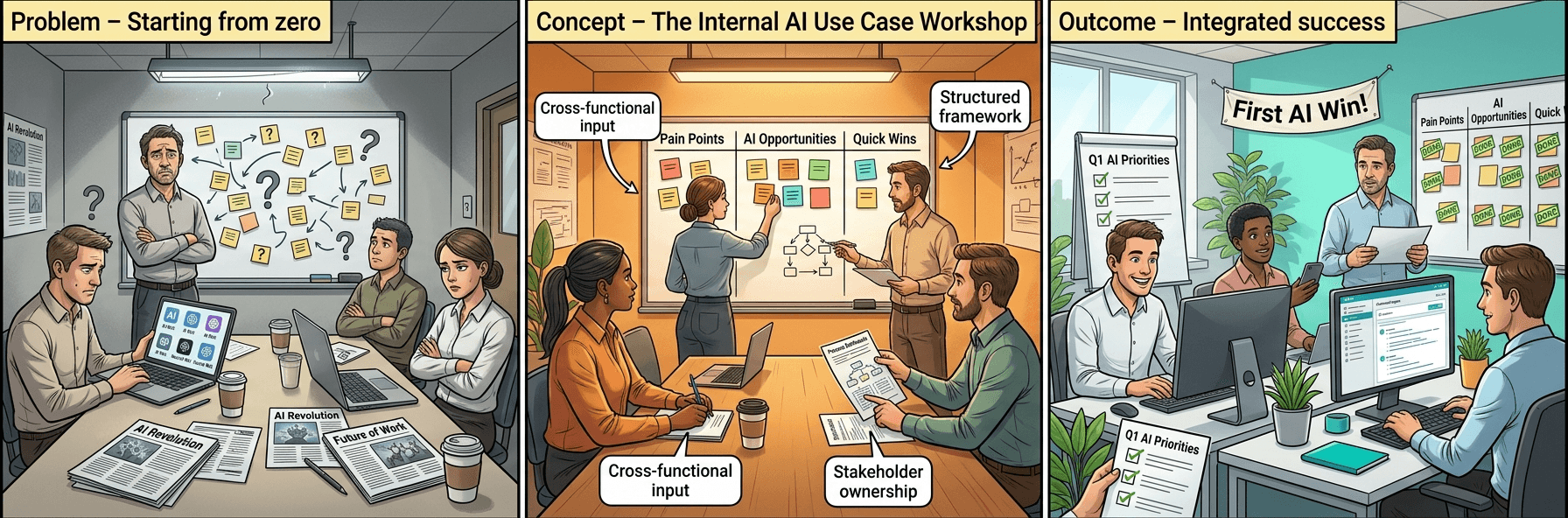
Broad artificial intelligence courses often overwhelm small teams. Instead, deliver short, role-specific sessions. A one-hour workshop for customer service staff on prompt patterns for refund requests produces faster adoption than a four-week general curriculum. After each successful pilot, create a one-page internal case study that includes the original problem, the prompt used, time saved, quality checks performed, and revenue or satisfaction impact. Circulate these stories in team meetings. Peer proof builds the trust that external statistics cannot.
A family-owned hardware store ran monthly 45-minute lunch-and-learns where employees presented their own artificial intelligence wins. One session on AI-generated inventory reorder lists led three other departments to adopt similar prompts within two weeks. This peer-driven approach moved the business into Stage 3 governance without outside consultants. The store owner addressed the objection of meeting fatigue by keeping sessions strictly to 45 minutes and tying each to a single measurable outcome.
Conclusion
Seventy-seven percent of SMBs have started with artificial intelligence, but the real opportunity lies in moving past shallow experiments. By building prompt libraries, enforcing human-in-the-loop checkpoints, and tracking hours saved alongside revenue impact, any business can close the confidence and workflow gap. The firms that treat artificial intelligence as a governed workflow rather than a novelty will pull ahead, turning early time savings into sustained productivity and new growth. Start today with one shared prompt library entry and one weekly metric. The data shows the path is clear; the only remaining variable is consistent execution.
Additional Implementation Playbook
To operationalize these tactics, SMB leaders should schedule a 30-day pilot kickoff meeting. Week one focuses on selecting the five core tasks for the prompt library and assigning owners. Week two requires setting the human-in-the-loop policy and creating the shared metrics spreadsheet. Weeks three and four involve running the first internal case study and reviewing results in a team huddle. Repeating this cycle quarterly ensures continuous improvement and prevents regression to shallow usage. With these steps, SMBs can convert the current 77 percent adoption statistic into meaningful operational transformation. The playbook also includes a simple objection log template where teams note recurring doubts and pair each with a quantified counter-example from their own data, reinforcing momentum without external consultants.
Sources
- https://www.goldmansachs.com/pressroom/press-releases/2026/small-businesses-embrace-ai-but-need-training-and-support-to-fully-harness-it
- https://quickbooks.intuit.com/r/small-business-data/ai-impact-report/
- https://insight.kellogg.northwestern.edu/article/4-stages-ai-adoption
- https://fortune.com/2026/03/18/small-business-ai-slow-integration-across-operations/
- https://www.thesmallbusinessexpo.com/blog/the-trust-gap-small-businesses-are-using-ai-more-but-still-dont-fully-trust-it/